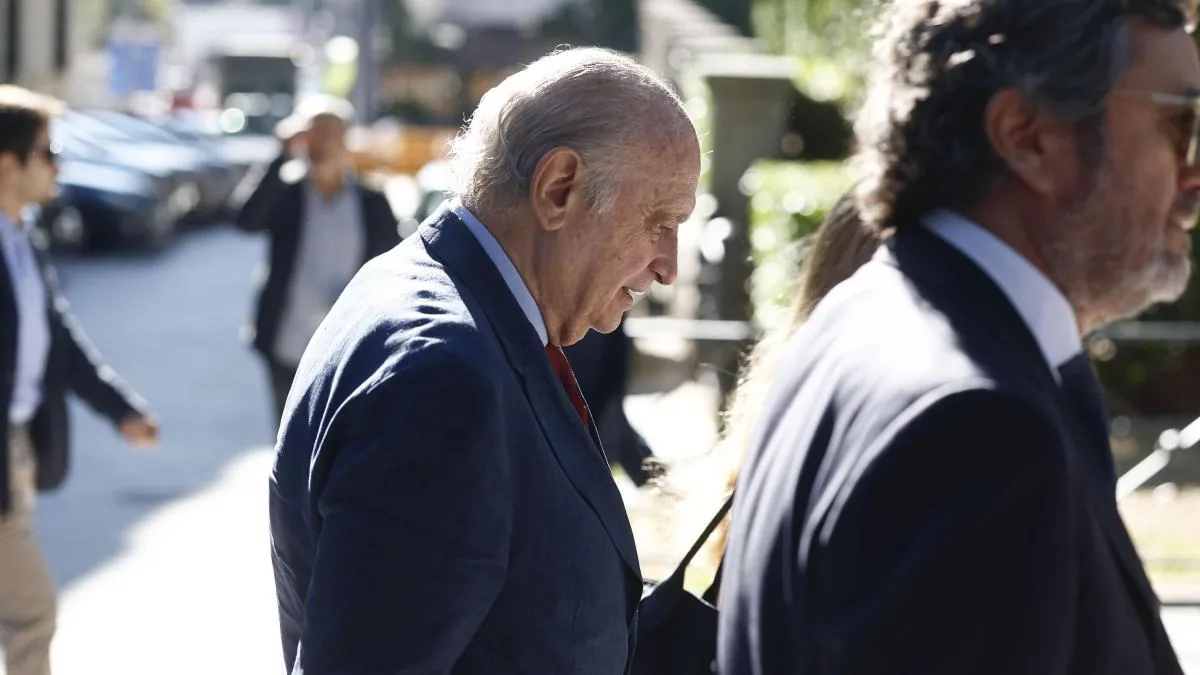
There is a smell of a pact —of non-aggression— in the courtroom of the National Court where the trial for Operation Kitchen is taking place, the alleged police plot launched in 2013 to steal incriminating information against the Popular Party from its former treasurer, Luis Bárcenas. After the tense confrontation between former Interior Minister Jorge Fernández Díaz and his former number two Francisco Martínez during the investigation phase —over some SMS messages that led to the former’s indictment— this Thursday an expert pointed to a manipulation of those incriminating messages without the former Secretary of State, who took them to a notary, refuting even the slightest shadow of doubt cast.
Read more The trial against the Pujol family is ready for judgment
The messages were a bombshell during the investigation because their detonation reached the top Interior official during Mariano Rajoy’s absolute majority. Those communications referred to Bárcenas’s former driver, alleged mole of the plot, as well as the development of the parapolice operation to steal documentation from the former treasurer. Martínez went to two notaries, with whom he had a friendship, to notarize them before submitting them to the National Court. Fernández Díaz has always denied being the author of the SMS messages that have brought him to the dock. But that evidence has been fading away.
First, it was the two notaries who confirmed that in their records they only included what Martínez asked them to do: screenshots of the messages. But, in no case, did they check on his mobile whether the phone number assigned to the contact saved in his agenda as “Jorge” really belonged to his former boss at the Ministry of the Interior. This Thursday, the expert who appeared at the request of the former Interior Minister went a step further, pointing to possible manipulation. “From my technical point of view,” declared computer expert Javier Rubio, “there are strong indications that something does not add up.” “Everything seems to indicate that this is not right,” he responded when lawyer Jesús Mandri questioned the authenticity of the messages, pointing to the “inconsistencies” of the screenshots that appear with different morphology.
—It is impossible to prove [that they were sent by Fernández Díaz].
The defense also focused on messages missing from the conversation, which the expert described as “evidence mutilation.” According to the computer expert, who also answered questions from the Anti-Corruption Prosecutor’s Office, to record this type of digital evidence it is necessary to make a dump of the mobile phone. In no case a notarial record, in which screenshots can be included, as he criticized, from applications to make fake SMS. “The notaries must have been somehow deceived or confused, there are very serious technical deficiencies in those supposed messages,” he insisted. All this, without Martínez’s defense intervening.
Read more An express paella promises to taste Spain in five minutes
The underlying non-aggression pact was also glimpsed in Fernández Díaz’s request to testify after his former number two, even though he should be the first to open the list. Lawyer Pedro Colina said he had no objection. Anti-Corruption showed more reluctance, recalling that in any case the former minister could use the last word to clarify any issues he considers.
Next Monday, the court will resolve this issue, although the start of the defendants’ testimonies is still unclear. According to the schedule, they should begin next week, but everyone in the courtroom thinks it may be delayed since all the audios that serve as evidence in the case are still pending, as well as the seven statements made during the investigation by Commissioner Enrique García Castaño, alias El Gordo.
Read more Messi reinterprets Wagner