Changes in the way of living, working, and traveling are driving new ways of staying in cities. Increasing international mobility and the emergence of profiles such as digital nomads, displaced professionals, or people in transition are consolidating a more dynamic demand linked to temporary stays. In this context, flexible accommodation is gaining prominence as a growing alternative: it offers greater versatility than traditional formulas, with included services — such as cleaning, internet, or utilities — and access to common areas and facilities. All this in a format that combines comfort, functionality, and a more complete experience during the stay.
Read more UK mission with paratroopers and doctors to treat a passenger from the ‘Hondius’
In Barcelona, a leading city for its tourist and business appeal worldwide, one of the most promising coastal areas is La Catalana, in Sant Adrià de Besòs, which will host a new flexible accommodation project aimed at short and medium-term stays, adapted to professional profiles, work-related relocations, and new forms of urban life. The municipality has transformed from an industrial enclave into a space of innovation and new opportunities, maintaining its diversity and character.
From industrial past to innovation hub
Proximity to the 22@ district, the future Catalunya Media City around the Tres Chimeneas, and the Inditex Campus makes the town one of the new hubs of economic activity, innovation, and talent attraction. It is one of the most transformed environments in the metropolitan area of Barcelona, combining the recovery of its industrial past with a new technological vocation, which is generating a growing demand for flex living linked to professional activity.
“The flex living model responds to a structural transformation in the way of living and staying in cities. Our goal is to develop assets that capture this demand and generate sustained value over time,” says Agustín Orcasitas, Chief Commercial Officer of Kategora, promoter of the new flex living complex in Barcelona. “Sant Adrià represents one of the greatest growth opportunities in the metropolitan area of Barcelona. With Kora Volta, we reinforce our commitment to developing assets that combine profitability, sustainability, and a positive impact on the city,” he adds.
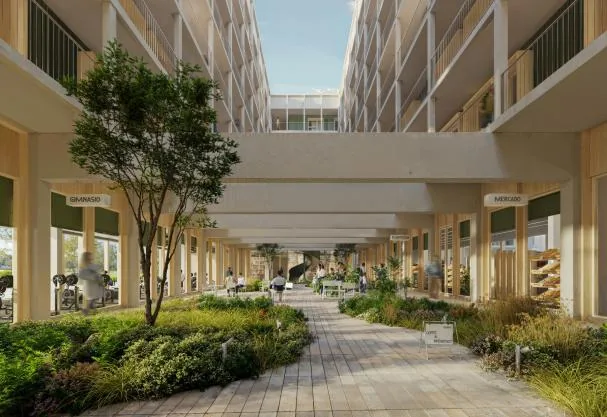
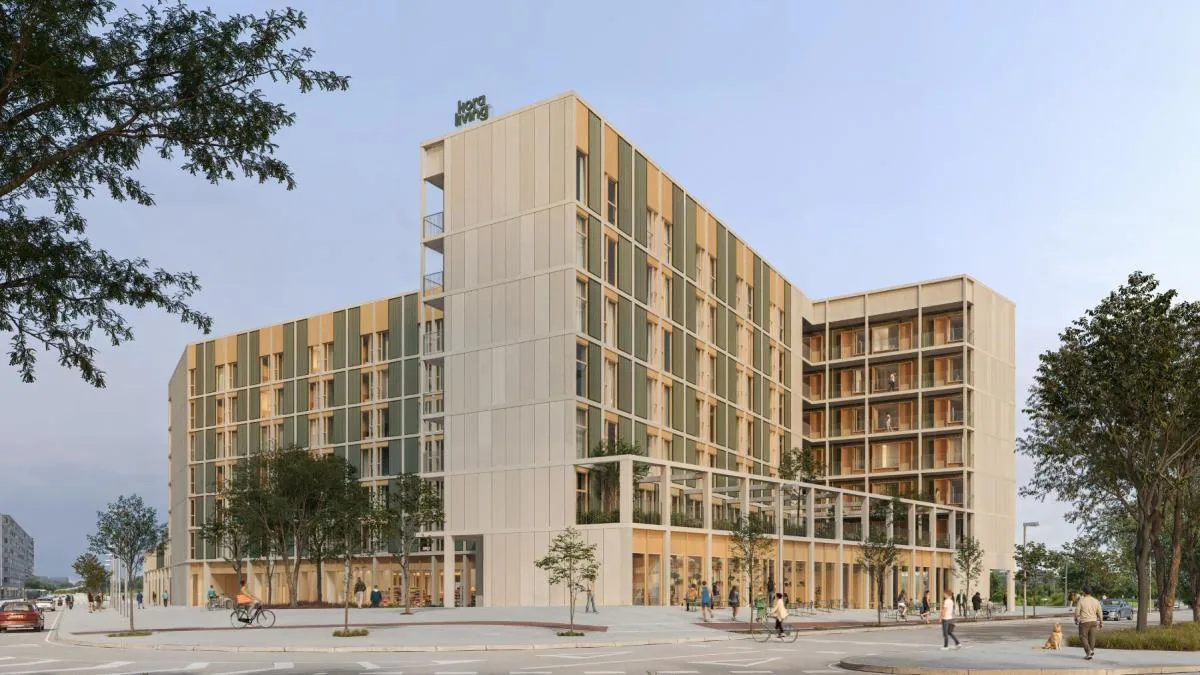
Kora Volta, Kategora’s new hotel complex, scheduled to open in the first quarter of 2028, will feature 270 apartments ranging from 28 to 42 m² designed to accommodate flexible stays from one day up to a year, and more than 1,000 m² of common areas with a pool, gym, gastronomic spaces, work areas, and meeting zones. One of the distinctive elements of the complex will be its commercial hub located on the ground floor, conceived as a 978 m² space destined to become a new nerve center of La Catalana.
This proposal includes various premises for local businesses, gastronomic spaces, room rentals, gym, and initiatives linked to local entrepreneurship, fostering the connection between the complex and the daily life of the neighborhood. Added to this is an interior courtyard conceived as a contemporary agora, designed to promote coexistence between neighbors and guests in an open and dynamic environment, capable of generating economic opportunities, boosting local talent, and strengthening the building’s integration into the urban fabric.
Read more “Hey, Meta, what do I have in my hands?”: this is how AI can help blind people
An integrated project at all levels
The project is signed by the Barcelona-based studio BXD arquitectura, whose proposal stems from a deep reading of the Sant Adrià context: a territory historically built from mixture, where industrial, urban, and social layers coexist as overlapping layers. This identity has been transferred to the Kora Volta building, conceived as architecture that integrates with the existing ones and with a design that bets on clarity, constructive logic, and the absence of artifice.
The interior design, developed by Miriam Barrio, and the landscaping, by MataAlta Estudio, use materials, textures, and vegetation that connect the building with its natural and urban surroundings. In line with the company’s values, the complex will incorporate advanced sustainability criteria, with high energy efficiency and solutions aimed at optimizing resource consumption.
Kora Volta is part of Kora Living’s ‘Flex’ line, Kategora’s hotel operator, in its proposal for complexes with large common areas, located in strategic enclaves and well connected to the main urban and historical centers, which Kategora has already consolidated in assets such as Kora Green City (Vitoria-Gasteiz) or Kora Nivaria Beach (Tenerife), which have demonstrated their ability to generate sustained profitability, reaching results above 9% in 2025.
Operational efficiency and profitability
Kora Volta thus becomes an investment opportunity with an estimated net return of 7% and prices starting from 210,000 euros per apartment. “It is born as an asset conceived from the origin to maximize operational efficiency and profitability, in an environment with growing demand for flexible accommodation linked to economic activity,” clarifies Agustín Orcasitas, Chief Commercial Officer of Kategora.
The project is developed under Kategora’s investment model, which this year celebrates its 20th anniversary under the claim “We continue building value, legacy, and future.” A model based on horizontal division sales and comprehensive management through Kora Living, which allows investors to access a professionalized asset, with income linked to operation and without the need for direct management. The apartments are exclusively intended for investment and will be operated under a hotel license, providing legal security and operational stability in an increasingly demanding regulatory context.
Read more The error of the crime reaction manual