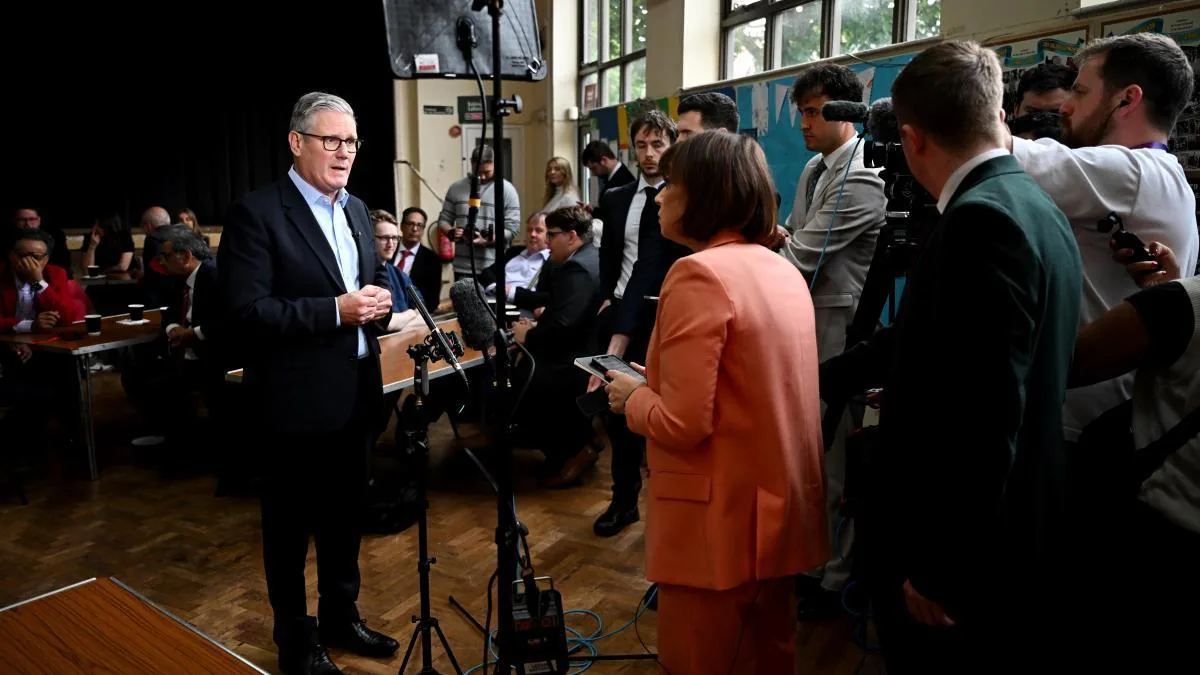
“Nobody is moving me from here,” said Keir Starmer, tying himself with a double sailor’s knot to the chair in his Downing Street office after one of the worst electoral results in Labour’s history (if not the worst), with the loss of power in Wales, half of the councillors he defended in the English local elections, and total abdication in Scotland. He admits the disaster but believes he can fix it with a couple of paracetamols, a colonoscopy, and a visit to the hygienist for a dental cleaning. Uncomfortable interventions, of course, but they are routine and no one dies from them.
Read more Politicians like kleenex
The British Prime Minister had marked May 8 for months in his calendar as “tsunami day,” when the results of the regional and local elections would be announced, and the catastrophe did not catch him by surprise. His plan is to take advantage of his rivals’ indecision for the throne (none wants to be the first to strike) and the complexity of the mechanism to replace him, make Monday one of those speeches full of vague promises, half-hearted alibis, and clichés that fuel cynicism and voter anger, and present his program for the new legislature in Parliament on Wednesday. And hope the storm subsides in a few weeks.
The far right sweeps the working-class regions of northern England that voted for Johnson and supported Brexit
His argument is that you don’t change pilots mid-flight (“I have no intention of shirking my responsibilities and leaving the country in chaos”). But with the Labour ship at the mercy of the waves and taking on water everywhere, the question is whether Captain Starmer will achieve his wish to finish the journey, either by bringing it safely to port or crashing against the rocks. The mutinous sailors (a good part of the parliamentary group and various union leaders) have raised white flags and are shouting hoarsely “out, out,” threatening to tie him to the mainmast and have someone else take the helm. It’s not easy, but behind the scenes party barons are trying to persuade the Prime Minister to set himself an expiration date (as Tony Blair did under pressure from Gordon Brown) and announce that he will retire before the next general election, thus allowing an orderly succession process.
That the process would be orderly is largely a chimera, because Nigel Farage (far right), the Conservatives, the Liberal Democrats, and the Greens would demand a general election the moment Starmer said he was leaving so that the new leader of the country would have the legitimacy of the polls instead of just the support of Labour MPs and grassroots. On the other hand, Wes Streeting (Health Minister) and Angela Rayner (former Deputy Prime Minister) are interested in the battle being fought soon, before Andy Burnham (the Mayor of Manchester) has a seat in the Commons and can challenge them for the throne. It is what is called a “Mexican standoff,” like when in Western movies three or more gunmen faced off, with none having a clear advantage and drawing the revolver would almost certainly trigger death.
The Greens (radical left) make headway and win their first mayoralty in the London borough of Hackney
In Wales, Labour was not only defeated for the first time in 104 years but suffered the humiliation of coming in third after the far right, and Eluned Morgan (their leader) lost her own seat. The new First Minister will be Rhun ap Iorweth, who has led the Plaid Cymru separatists to victory (43 seats, compared to 34 for Reform and 9 for Labour), heading a progressive coalition government. In Scotland, the SNP will fall just short of an absolute majority in the Holyrood parliament but will achieve a fifth consecutive victory and begin a third decade in power. Given that Sinn Fein is in charge in Belfast, three of the four countries that make up the United Kingdom will have nationalist executives, in a clear rejection of Jacobin centralism.
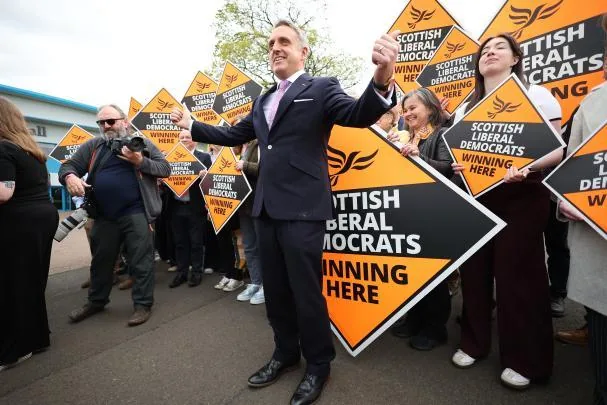
In the English local elections, Labour lost Birmingham (the country’s second city), several strongholds in the capital, and about 1,200 councillors (half of those it defended), mainly to Reform, but also to the Greens, who have won their first mayoralties in the London boroughs of Hackney and Lewisham. Working-class northern towns like Hartlepool, Tameside, or Blackburn have, for the first time in history, fallen into the arms of the far right. These are the same voters who believed in Brexit and were seduced by Boris Johnson.
Read more What hidden reason is behind Latin gangs recruiting minors in schools?
If the results are extrapolated to a general election, Farage could be the new prime minister
The dilemma for Labour and Starmer is how to correct the course, whether by veering left, right, or if it is better to continue down the center of the road. In northern England, it was swept away by Reform, which would suggest the medicine of a tougher immigration policy. But in London and university cities, a substantial number of its traditional voters have switched to the Greens, due to support for Palestine and policies inherited from Jeremy Corbyn, which would recommend precisely the opposite. The establishment may be repelled by neo-fascism, but the radical left considers it contrary to its economic interests and does everything possible to neutralize it.
Extrapolating the results of regional and local elections to a general election is tricky. But if Farage’s party obtained 27% of the vote as yesterday, followed by the Conservatives at 20%, Labour 15%, Greens and Liberal Democrats 14%, it would not reach an absolute majority but could propose a coalition in the style of PP-Vox (with the ultras in the commanding position). The tories are divided between those in favor of uniting the right in a bloc and those afraid of being swallowed up.
The Conservatives face the dilemma of accepting a secondary role in a large right-wing bloc
Starmer proposes to overcome his health crisis with cosmetic surgery in Turkey and a root canal treatment in the dentist’s chair. But the doctors do not agree on the nature of the illness. Some diagnose heart failure (he has gone too far to the right on issues like immigration), others a pancreatic ailment (lack of vision and ideology), some recommend he see an oncologist to see if the chronic loss of working-class voters is due to a benign or malignant tumor. But the Prime Minister ignores them and makes it clear that he will only leave his Downing Street armchair in a straitjacket.
The three contenders for the throne
For a challenge to Keir Starmer’s leadership to occur, there are three ways. The first is that at least 81 Labour MPs support a rival candidate, which would trigger a contest between the two. The second is that Cabinet members and party heavyweights tell him his time has come. The third is a wave of resignations from ministers, secretaries, and undersecretaries of state, as happened to Boris Johnson. There are also three contenders for the throne, but all with their burdens. Health Minister Wes Streeting is considered too right-wing and would represent continuity. Former Deputy Prime Minister Angela Rayner has the support of Labour’s soft left but is awaiting the outcome of a Treasury investigation. Andy Burnham, the Mayor of Manchester, is the most popular politician in the country but lacks a seat in the Commons.
Read more Anti-corruption gives credibility to Aldama’s thesis that he was collecting for the PSOE