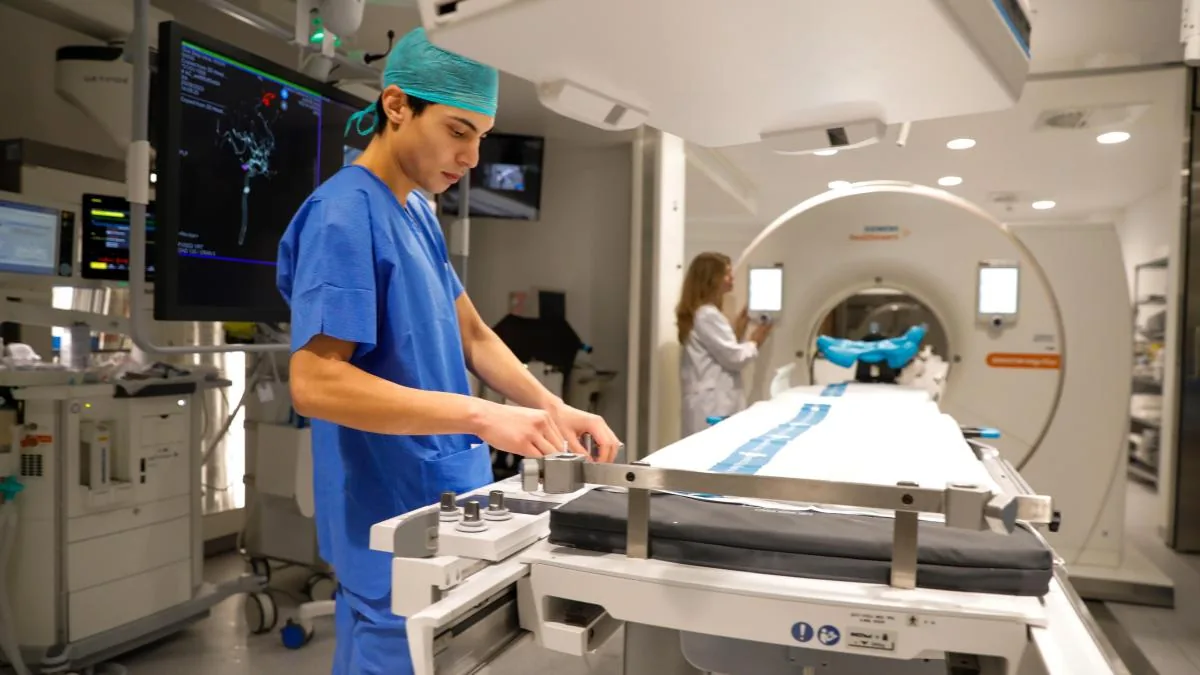
In some patients, mechanical thrombectomy, which is the standard treatment, may not be sufficient to ensure a good recovery after an ischemic stroke. A new strategy based on research from the Clínic Hospital of Barcelona improves outcomes.
Read more Moreno questions Vox’s national priority and considers it mere unrealistic propaganda
A study led by the Clínic, involving 14 Spanish hospitals, including the Catalan Josep Trueta, Germans Trias i Pujol, Hospital del Mar, and Sant Pau, shows that administering a thrombolytic drug directly into the cerebral artery after mechanical thrombectomy significantly improves functional recovery following a brain hemorrhage.
Also read
Mechanical thrombectomy is a minimally invasive procedure that allows the clot to be removed and blood flow to be restored. “But this does not always guarantee that blood reaches all areas of the brain well,” explains Arturo Renú, the first author of the study, published in the journal JAMA.
Once the clot is removed from the main artery, poor circulation may persist in smaller vessels of the brain. “It’s like reopening a highway, but some side streets remain blocked,” illustrates Ángel Chamorro, coordinator of the research and head of the Cerebrovascular Diseases Unit at the Clínic. This blockage can prevent complete neurological recovery in certain patients, even if the procedure has been technically successful.
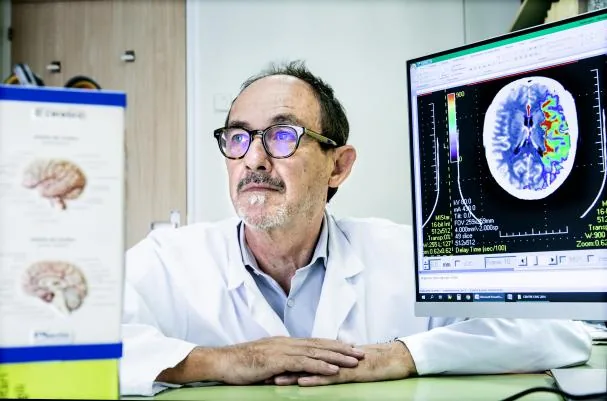
The Choice-2 study reinforces the conclusions of the research published by the same team in 2022, according to which reopening the main artery is not enough to ensure good brain recovery. In this case, the researchers studied 440 people with severe ischemic stroke, successfully treated in 14 hospitals.
Read more New images of the Louvre robbery: the moment the thieves drop Eugenia’s crown
After mechanical thrombectomy, half of the sample received the usual treatment. The other half received an administration of alteplase, a drug used to dissolve small blood clots that have formed in the brain.
A study of 440 patients shows that 57.5% have a good functional recovery
Patients treated with this combined strategy fared better. Ninety days after the stroke, 57.5% of this group showed very good functional recovery, with no disability or mild symptoms. In the group treated only with thrombectomy, this level of recovery was 42.5%.
According to Chamorro, these results represent key knowledge to continue advancing towards treatments more tailored to each patient and lead to a paradigm shift in the treatment of ischemic stroke.
Read more Rosalía counterschedules the Andalusian electoral campaign in Seville