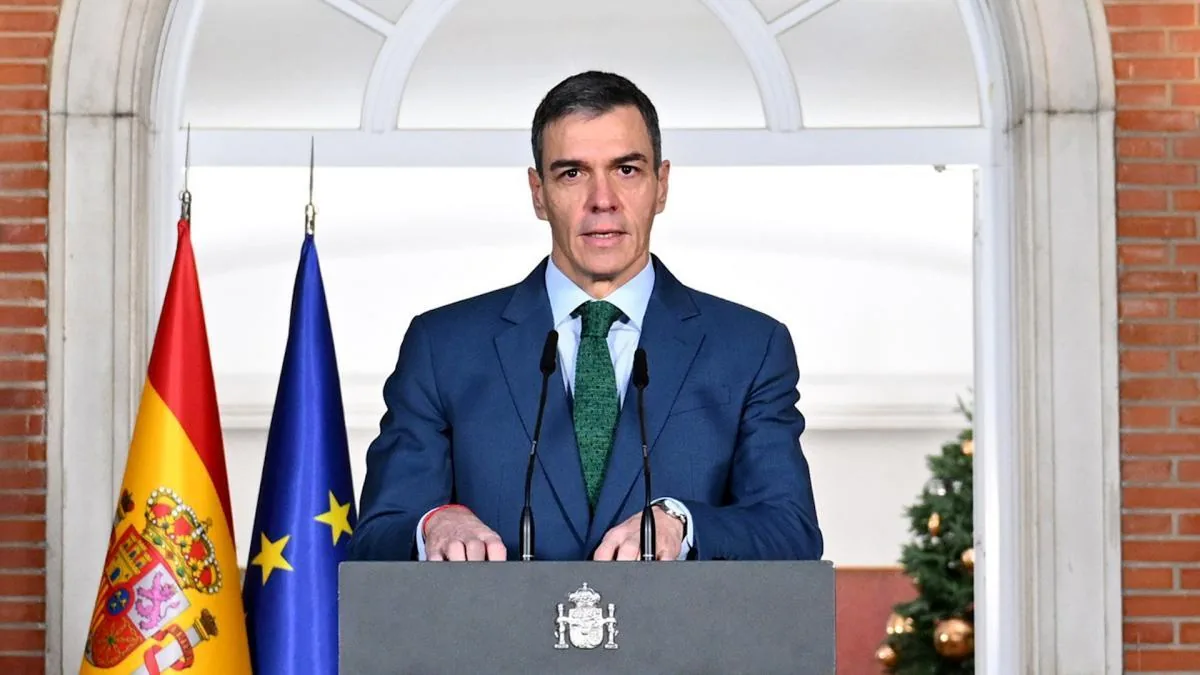
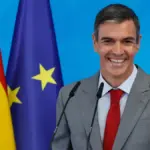
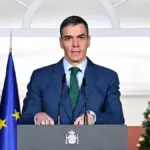





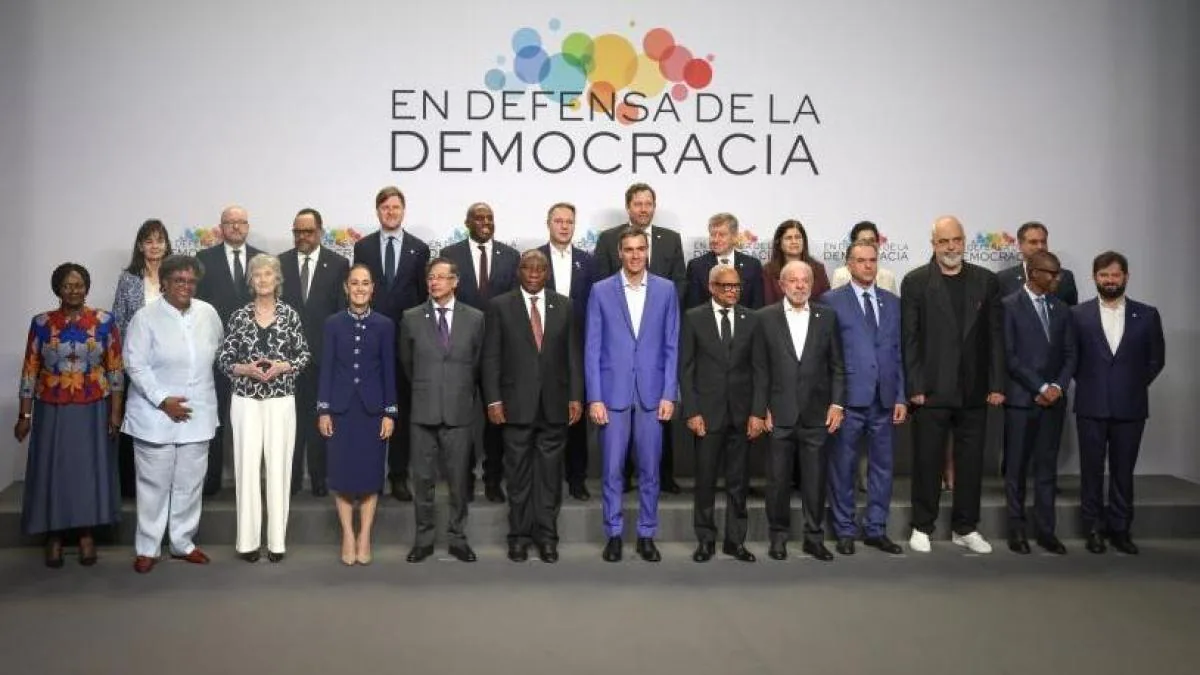
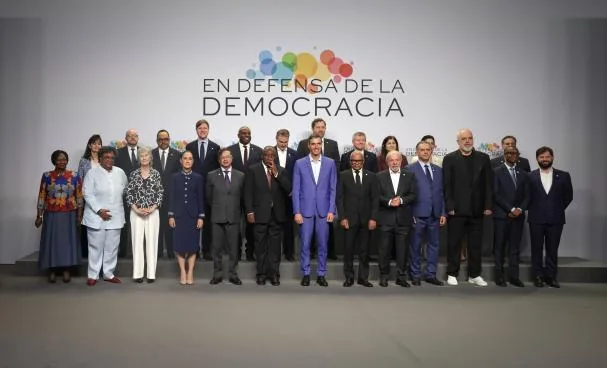
The IV Meeting in Defense of Democracy began this Saturday in Barcelona with a clear purpose: to present to the world strategic principles for combating the far-right wave that questions multilateralism and democracy, a current embodied by the US president, Donald Trump, whom no one mentions in this conclave but whose political action is very present. Led by the President of the Government, Pedro Sánchez, the meeting began with his intervention, in which he advocated for a “concerted action” by all progressive governments in the world in favor of “strengthening the alliance” that convenes them today, and combating “fear with more democracy, and inequality with more justice.” Underlying this commitment is the joint proposal to reform the UN due to its ineffectiveness in facing global challenges and acting in the face of the proliferation of international conflicts.
Sánchez gathers progressive leaders from several countries at the Fira de Barcelona for this high-level meeting, including the presidents of Mexico, Claudia Sheinbaum; Colombia, Gustavo Petro; Brazil, Lula da Silva; Uruguay, Yamandú Orsi; the President of Ireland, Catherine Connolly; South Africa, Cyril Ramaphosa, and the President of the European Council, António Costa.
The head of the Executive took the floor at the beginning of the event to call for action against the rise of Trumpism and the far-right in the world: “Our response cannot be merely defensive, we have to propose, lead…” because “democracy is not only defended, but strengthened day by day,” he warned.
“Our response cannot be merely defensive, we have to propose, lead…”
The president structured his speech around the need to act against the risk that affects “all nations”: “That democracy is emptied from within while being attacked from without.” “We are here to respond, to act” around “a political community under construction” formed by a group of countries committed to “doing whatever is necessary to protect democracy” against attempts to “challenge the rules of international law with the use of force,” he emphasized.
Sánchez pointed out the common denominator of those present at this meeting: “We share the vision that democracy is the best system” and “the conviction that our democracies must adapt and renew themselves.” Thus, the president expressed satisfaction that with this summit “we are going to take another step to unite our forces.”
This high-level meeting is expected to approve an institutional declaration based on three principles, which Sánchez highlighted: the defense of institutions and multilateralism, with UN reform in focus; concern about polarization in the digital sphere, particularly on social media, where far-right currents move like fish in water; and the fight against inequality, whether economic, gender, or racial.
“We share the vision that democracy is the best system” and “the conviction that our democracies must adapt and renew themselves”
In the first area, the president defended multilateralism, a rule-based order, based on cooperation, and pointed out that “the time has come for the United Nations to be renewed, reformed, and led by a woman. It is a matter of justice and credibility,” he argued. “We believe in a rule-based international order. But the multilateral system needs to be renewed. The UN can only survive if it represents reality. We need a more democratic, more representative UN,” the president justified.
In the digital sphere, a “concern we all share,” Sánchez pointed out the need for technology to be a “tool for progress” but with rules. “Disinformation and algorithms cannot condition public conversation,” he said, nor should algorithms “reward hatred, polarization, confrontation, violent messages, or allow technological power to remain outside democratic control.”
Therefore, he advocated for a “legislative agenda that allows for the prosecution of algorithmic manipulation and combating the impact of hatred” and for limiting minors’ access to social media. “The internet knows no borders; either we advance together or no one advances because either the digital space is democratic or it will not be,” he concluded.
Finally, in the fight against inequality, Sánchez pointed out that this scourge “is hardly compatible with healthy and strong democracies” because “when the population feels that the system is not responding, polarization grows.” At this point, the president warned that “when progress is not distributed, when opportunities do not reach everyone, and broad segments of the population feel that the system is not responding, democracy loses legitimacy, and that is where extremism grows.”
Lula da Silva
Brazil’s president urges UN reform due to its ineffectiveness in international conflicts
Brazil’s president, Luiz Inácio Lula da Silva, intervened to emphasize the defense of multilateralism and denounce the United Nations’ lack of effectiveness in international conflicts, supporting the idea put forward by Sánchez and many of the participants in this forum in favor of renewing the organization.
“Extremism and disrespect for the UN house are very dangerous,” lamented Lula, who denounced that this is the moment when “we have more armed conflicts in the world since World War II and the UN Security Council does not meet.” For the Brazilian leader, this international body “does not work,” among other things due to the veto power exercised by a few, most powerful countries, while other important ones, among which he cited India, Brazil, Germany, Japan, or Indonesia, could participate in the Council but cannot. In this regard, Lula advocated for the UN Secretary-General to “convene extraordinary meetings without asking the five members of the Security Council,” because this body “cannot remain silent” in the face of current global challenges that seriously endanger the survival of democracy.
Claudia Sheinbaum
“Instead of war, let us sow peace”
Mexican President Claudia Sheinbaum also intervened in the meeting, proposing that the next summit be held in 2027 in her country to discuss the economy of well-being. In her speech, the president praised the virtues of her people and made a plea for peace, justice, and fraternity.
“When we talk about democracy, we talk about the pursuit of the happiness of its people. It is the power of the people, by the people, and for the people,” she expressed. She then launched a couple of concrete proposals: one, already proposed at the G-20, represents, in her opinion, a “new vision for the UN” and translates into allocating 10% of armament spending to reforest millions of hectares. “Instead of war, let us sow peace,” she justified. But she also proposed approving an institutional declaration against potential military action in Cuba.
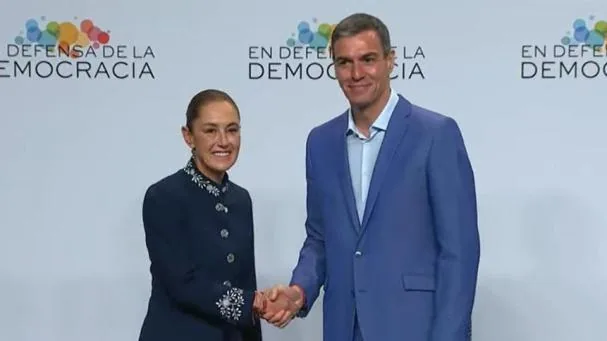
Sheinbaum denies a diplomatic crisis with Spain: “There never has been one”
EFE
Gabriel Boric, former president of Chile
A “very great sign of hope” in a “moment of inflection for the world”
Former Chilean president Gabriel Boric, one of the precursors of this high-level summit, also advocated for the United Nations to be led by a woman “for the first time in its 80-year history.” The leader highlighted that this summit represents a “very great sign of hope” in a “moment of inflection for the world” and called for “strengthening” multilateralism, while introducing “changes” to face new global challenges. “Tradition does not consist of the adoration of ashes but in the preservation of fire,” he stated to justify these changes.