The phenomenon of Latin gangs in Barcelona and its metropolitan area, or simply youth gangs, because it is true that today’s gangs have become more multicultural, has gone from being residual to becoming a growing problem. After a few years, between 2014 and 2023, that did not represent any risk, these groups are back under the spotlight of the Mossos d’Esquadra police officials, who are finalizing a specific plan led by the general information commissariat to address the issue.
Let’s focus on the city of Barcelona. Who are those approximately 400 young people who capture police attention and who since the summer have been involved in increasingly violent incidents with bladed weapons, with machetes as the protagonists of the brawls?
The Mossos finalize a specific plan in response to the increase in youth gang violence
The consulted analysts identify two hegemonic groups, the Trinitarios and Barrio 18. They operate like the first Ñetas and Latin Kings that emerged in Catalonia in 2000 and acted as franchises linked to the parent groups in their Latin American countries of origin. Those gang members were newly arrived youths who found in the gang the rooting and pride of belonging they had lost when forced to leave their countries and arrive in a territory where they did not fit in.
Today’s members are mostly second and third generation and, although leadership is mainly young people of Latin origin, there is a large presence of North Africans, Sub-Saharans, or Spaniards of several generations who, instead of creating their own gang, join the existing ones. Without losing sight of the latest wave of Honduran immigration, which is causing the immediate affiliation of some newcomers. “They were gang members there and as soon as they land they look for it here,” warns an analyst. These are gangs that have increasingly younger boys and girls among their ranks, even under 14 years old, with the police and judicial difficulties that this entails.
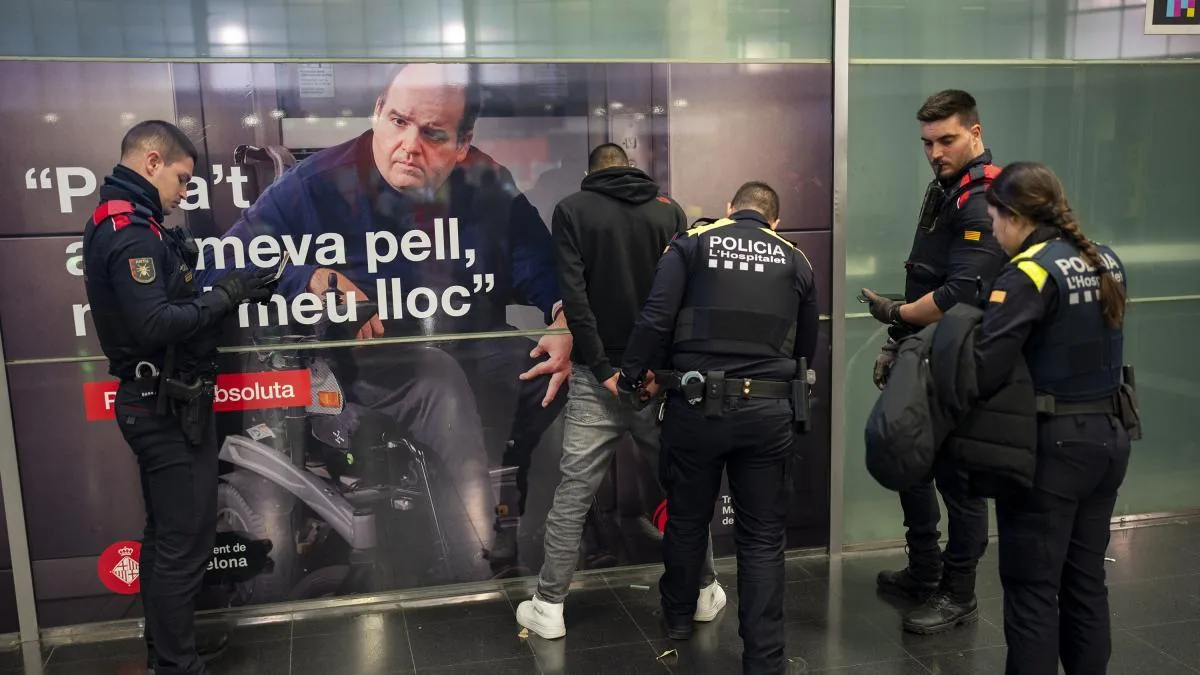
Last month, the Mossos, together with several Barcelona urban guards, launched a device aimed at making gang members feel pressure in the spaces where they gather. They are identified and bladed weapons are confiscated.
The Barcelona Urban Guard has long had this phenomenon in focus. Two of its investigators work exclusively on Latin gangs based on data provided by proximity patrols and communication with educational centers. The most important activity of these youth groups has been detected in parks of Horta-Guinardó, Nou Barris, and Sant Andreu, with an increasing incidence in Sant Martí, as well as in Les Corts and Sants-Montjuïc due to their proximity to l’Hospitalet, which has a specific problem and where the phenomenon, according to analysts, has overwhelmed the administrations.
Read more Merz sides with Trump in the trade dispute with Europe
Trinitarios and Barrio 18 protagonized last year, in the early hours of July 28 to 29, a machete fight with three seriously injured at the Antoni Gelabert sports courts, on Via Favència in Nou Barris. That incident marked a turning point in the relationship between the two gangs with brawls that, since then, have become increasingly frequent and violent.
To those groups must be added a third, more discreet one, the 300, which has allied with Barrio 18 in its rivalry against the Trinitarios.
About thirty groups and l’Hospitalet
While the Mossos finish the picture of youth gangs in Catalonia, mainly affecting l’Hospitalet, Barcelona, and some municipalities in the metropolitan area, they already report that there are about thirty diverse groups, some small and a few hegemonic. The reality in l’Hospitalet is especially complex, with groups that exceed the concept of violent youth gangs and have consolidated as criminal organizations dedicated to drug trafficking and robberies, and that in recent times have been involved in incidents with firearms. On March 28, a young Dominican died from a gunshot in Les Planes park after a previous fight. His family denied that he was a gang member.
All these gangs, about thirty in Catalonia, are not currently organically linked to the parent groups in Latin America. They share identity elements, symbols, and an aesthetic that identifies and distinguishes them from the rest. And what started as small-scale drug dealing is increasingly growing. Police and municipal officials are concerned that the increasingly violent confrontations end with fatalities, as well as the persistent prowling around educational centers to recruit minors under 14 years old to swell their ranks.
Under the umbrella of the plan being developed by the Mossos, local police of the municipalities affected by the activity of these youth groups will also act. The little that has been revealed about the new strategy is that it will involve investigators, territorial patrols, and non-police actors. The plan has three pillars: prevention, police intervention when crimes occur, and, if necessary, suppression.
Read more Trump’s popularity plummets six months before the legislative elections