





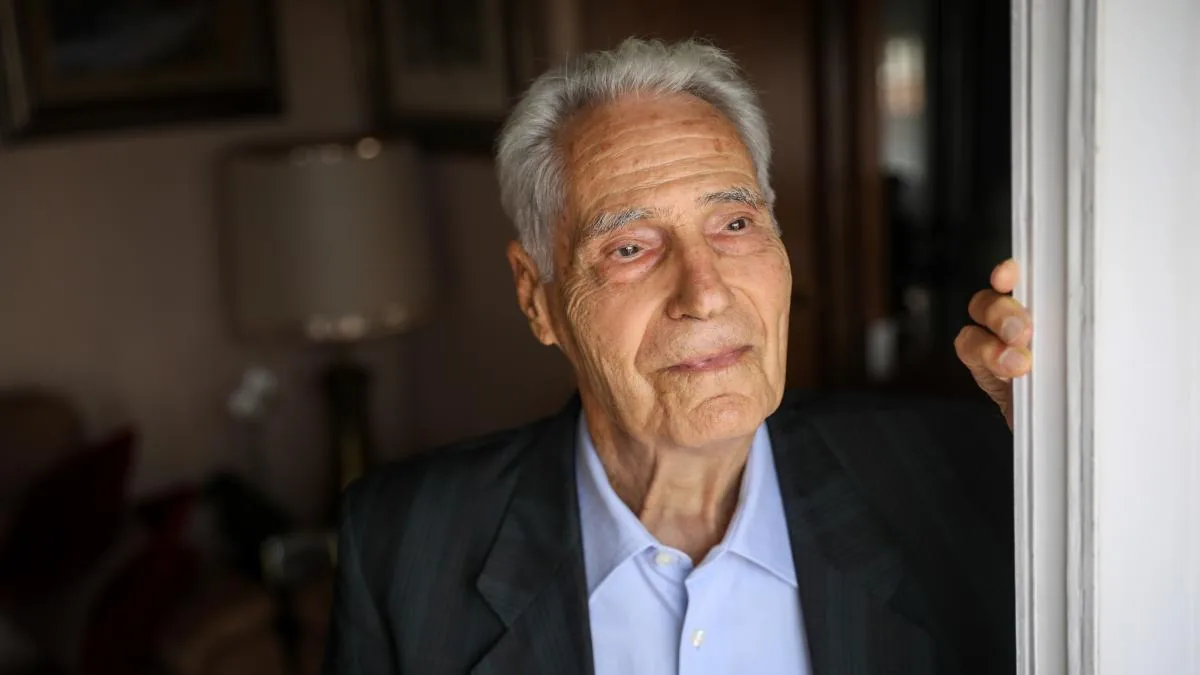
On August 3, 1965, a modest article appeared on the pages of La Vanguardia without a signature announcing the result of a surgical milestone. A 35-year-old woman with a terminal illness had received the first organ transplant (kidney) performed in Spain, at the Clínic hospital in Barcelona. “The operation took effect on the 23rd [of July], but the news was not released until the results had satisfactorily fulfilled the intended success,” the text indicates, one of the few mentions of the event.
Read more First championship ball of the five that Barça has
Today, the medical team that carried out the pioneering intervention would have a huge media impact. At that time, medicine entered a new horizon discreetly and overcoming ethical doubts. Last year, more than 6,300 organ transplants were performed in Spain. That one paved the way. Albert Brulles (El Catllar, Tarragonès, 1939), then a young doctor, is the only survivor of the group led by urologist Josep Maria Gil-Vernet and nephrologist Antoni Caralps. In 1967, Brulles’ doctoral thesis became the first publication on human kidney transplantation in Spain.
How did you get involved in the project while still a student?
Three years before finishing the degree, when you really study medicine, I looked for a doctor in my department and found Nicolás Magriñà Ferrer, an internist interested in kidneys. I arrived and he was alone. When he saw me he said: ‘Pleased to meet you, because I have some projects and I can’t carry them out alone. My patients reach the terminal phase, the kidney stops working, and I feel helpless because I have to send them home to die. Now there is a treatment called peritoneal dialysis, but I can’t start it alone’.
He didn’t even imagine a transplant.
After a couple of years, in 1963, just when I had finished the degree, a doctor named Antoni Caralps appeared, who came from Necker hospital in Paris and had witnessed the first transplants that had just been done there. ‘I’m looking for someone to help me start what is being done in Paris, which is kidney transplantation.’ Said and done. The three of us went to see who could do it, Josep Maria Gil-Vernet. We proposed it to him, and the man said: ‘Tomorrow’.
Until 1979, to perform a transplant you needed a court order, which delayed the organ extraction”
But they had to practice.
We had to at least do tests with dogs. We contacted Dr. Luera, who was the zoo veterinarian, and he said no problem. ‘From ten at night the operating room is free. Dogs, as many as you want.’ We did one dog, two… The kidney was removed and placed in the iliac fossa. There was no rejection because it was the same dog, and we saw if it worked or not: it worked perfectly. The third dog, when everything was ready, made a huge pee, a big stream of urine. Gil-Vernet, who was in the front row about to open the abdomen, got soaked, took off his gown very angrily, looked at all of us and said: ‘Enough! The next one has to be a real transplant.’ A month later it was done.
Were you sure of success?
Totally. Kidney transplantation has no mystery. It’s taking out the kidney and connecting it to an artery. Gil-Vernet did it directly to the vena cava, so the kidney was in the iliac fossa, which was the ideal place because it can be palpated and thus diagnose possible rejection, because in this case the kidney becomes tense.
Very easy, but it had never been done before, and some previous attempt in Madrid had failed.
The technique is basic, but you have to know how to make a good suture of the artery and the vein. Gil-Vernet was the king at that. There was never any problem.
Did you have to face legal conditions?
Until the Transplant Law of 1979 was approved, to perform a transplant you needed a judicial permit, authorization from a judge, because donors were usually accident victims. It was an important bureaucratic difficulty because it delayed the extraction of the organ.
Also read
How did you feel seeing that you had saved a hopeless patient?
We already knew it was going to work. A well-irrigated kidney works, for sure. It was no mystery. As doctors, we didn’t interpret it as something spectacular. The possibility of failure was rejection.
What has science solved since then?
The technique is the same. What has changed is the treatment. Today transplantation is a routine, simple, and very low-risk technique. Immunosuppressants [which prevent rejection of the grafted organ] have been the key.
At first, without donors, it was dramatic because you saw people dying without being able to transplant”
Is there anything left to solve?
In transplantation, no. What is not solved is preventing the progression of many kidney diseases to this terminal phase. Months and years go by and the kidney loses function until total failure and the need to put in a new one. Many patients still reach the terminal phase.
Now donors are abundant, but at first they were scarce. How did you select them?
According to a totally medical criterion, because there were few kidneys. First we looked at compatibility to avoid rejection. Then, if there were several candidates, the youngest. It was dramatic, because you saw people dying without being able to transplant. Those on peritoneal dialysis got peritonitis and it ended, those on hemodialysis ran out of vascular access… This has totally changed.
We already knew it was going to work; as doctors we didn’t see it as something spectacular”
What can currently be taken from your doctoral thesis?
Nothing (he smiles). It’s a historical document where the transplantation technique is described. But let me boast. I have the satisfaction of having appeared in an editorial of The Lancet and my name appears in six or seven volumes of this prestigious journal.
Today the team members would be celebrities.
This must be seen in the context of that time. We didn’t worry at all about publicity. A journalist appeared one day, we appeared in a note in some newspaper… It wasn’t something spectacular nor did it worry us.
Read more Kiwi returns to Wellington after more than a century of absence