At the beginning of this century, pilgrimages by the Spanish left to Porto Alegre became very fashionable. A trade unionist whose biography began as a street child earning a living as a shoeshine boy, street vendor, and, as a young man, as a metalworker, had just come to power in Brazil. Luiz Inácio Lula da Silva was the emblem of the “yes, we can” of the early 2000s, and the name of that Brazilian city became associated with international forums that proclaimed that “another world is possible.” It was a magnet for leaders like Gaspar Llamazares (IU) and, especially Catalans, like Joan Herrera (ICV). Although less enthusiastically for the official PSOE of the time, socialists like Cristina Narbona or Leire Pajín, who hadn’t even dreamed of being a minister yet, also dropped by. At that time, Lula represented the expectation of a pragmatic but ambitious left, with more audacity in pointing out economic power.
Read more Illa takes President Sheinbaum to visit the Barcelona Supercomputing Center
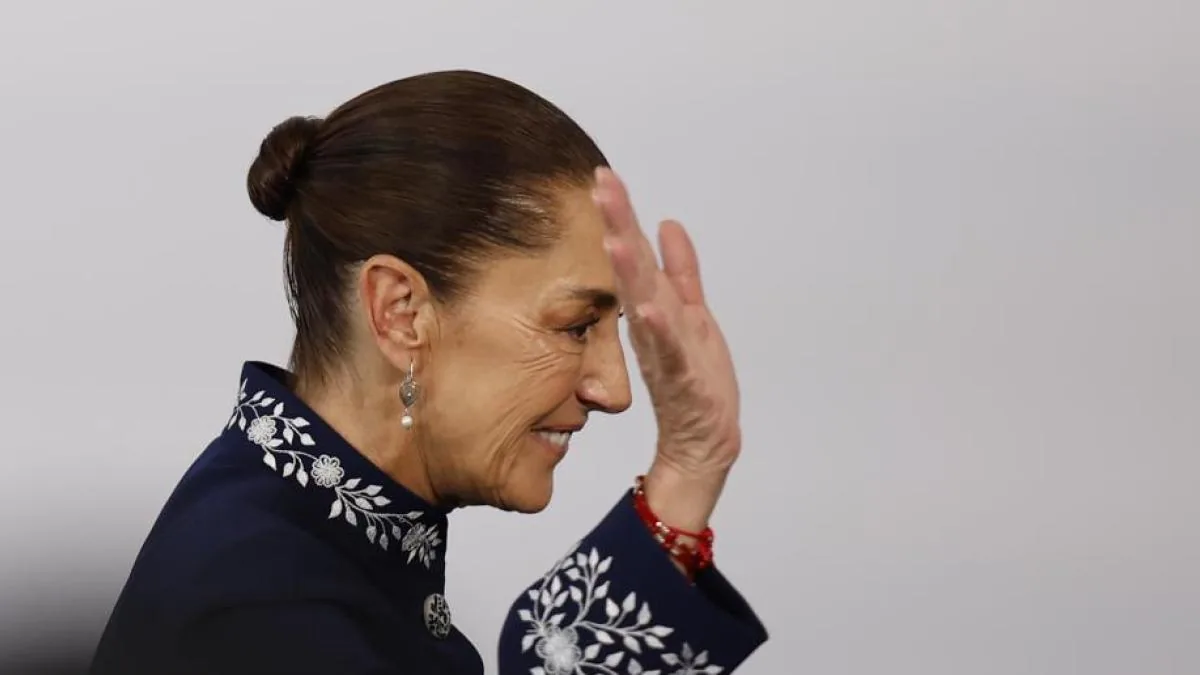
This week, Pedro Sánchez received the Brazilian president, now in his second term and about to run for elections again at 80 years old. The socialists are the hosts and the forces to their left have been relegated. However, the summit of progressive leaders in Barcelona is presented not so much as a longing for political and social change but as an ideological rearmament against the empire of the far-right, which has devoured many conservative or more centrist forces. Lula, even if he governs, is already part of a myth more anchored in the past than in the future. Gustavo Petro has disappointed many of the expectations placed by left-wing Colombians, so perhaps the presence of the Mexican Claudia Sheinbaum is the figure who has given the most prominence to the summit, apart from the special significance that institutional reconciliation with that country has for Spain.
“Happy Tax Day NY,” Mamdani tweeted yesterday, a new totem for progressive mayors
Sheinbaum is part of the left that wins elections by adopting two ingredients that appeal to the far-right: a nationalist accent and populist language. It’s the same formula that gave victory to the Democrats in New York, led by Mayor Zohran Mamdani. An example of his style: “Happy Tax Day, New York. We are taxing the rich,” he tweeted yesterday. Sheinbaum may have reconciled with Spain and is more subtle than López Obrador in nationalist language, but she follows his lead in that area, in addition to using the typical resource of the people against the “fifis,” which would be something like “posh” but with a more political connotation. Perhaps “cayetanos” would be more accurate. The term “fachosfera” that Sánchez uses is not far off.
It’s not just about language. One of the most commented phenomena in Brussels is the case of Henri Bontenbal and his party, the CDA, which is managing to recover from the center in the Netherlands. Bontenbal maintains the cordon sanitaire with Geert Wilders’ far-right Party for Freedom (you’ll remember him for his striking white hair), which is suffering wear and tear. But the centrist has resorted to boldness with promises like building cities from scratch: “We need the courage of the post-war years; it’s time to build new cities that give a home to our young people.” Not to mention Italy, always a laboratory, where the mayor of Genoa, Silvia Salis, a outsider of left, former athlete, is connecting with young people by talking about national “pride,” “vitality,” shaking off “fear,” and who presents herself as Giorgia Meloni’s nemesis.
In 2023, Sánchez framed the struggle with the PP under the discourse of fear of the far-right. But that is no longer enough. Trump’s emergence has allowed him to build a narrative of resistance against the arrogant ways of the US leader, but yesterday he warned that merely calling for resistance would not be enough. And therein lies the real challenge for the left, but also for conservatives and centrists if they want to recover against the far-right.
Read more Spain will formally ask Europe to break the association agreement with Israel
Vox sought to win the first round of its cultural war with the PP in Extremadura
In Spain, government pacts between the PP and Vox have begun to solidify. Extremadura will soon be followed by Aragon. The Extremaduran agreement centers on limiting rights, aid, and services for immigrants. Isabel Díaz Ayuso has raised her voice to show her displeasure, as Madrid is a refuge for thousands of Latin Americans whom the president has long tried to seduce. It remains to be seen whether the agreed measures will be applied, but in Extremadura, Vox sought to win the first round of the cultural war it maintains with the PP and has managed to change María Guardiola’s narrative. Ayuso does not have to adapt to Vox because the original already includes and transcends Vox. This is not the case for Alberto Núñez Feijóo.
In Germany, the so-called cordon sanitaire with the AfD is theoretically maintained, but the German Manfred Weber, the leader of the Populars in the European Parliament, has already activated an alliance with the far-right more than once (for example, on immigration) instead of aligning with socialists, conservatives, liberals, and greens, which is the pact that governs the EU. Viktor Orbán has fallen, and although Brussels breathes a sigh of relief, it is unknown how Peter Magyar will behave. So the key is France. If Marine Le Pen’s party wins, the current European balances will be shattered.
The progressive summit in Barcelona does not detract from Sánchez; on the contrary. But it could be a flash in the pan. It remains to be seen if the left is capable of renewing its ideas. Recipes are paramount. But so is knowing how to sell them convincingly in a world where the way of communicating has changed a lot in just a few years. In this context, one of the most unsettling questions is no longer just whether progressives can defeat the populism of the far-right using its own weapons, but whether they can do so without distorting the democracy they intend to defend along the way.
Read more Bandy Lee: “Trump is in psychiatric crisis and controls 5,000 nuclear warheads”