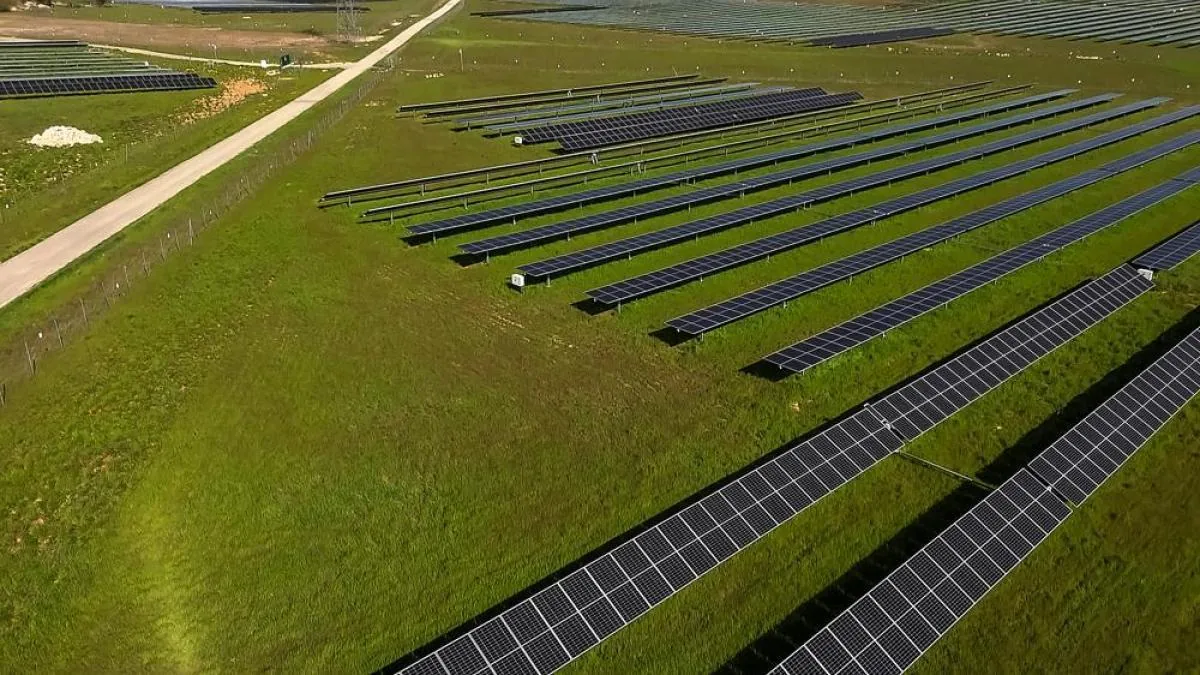
The fever for developing renewable energy projects in Spain, especially photovoltaic ones, is not only cooling down but also threatens to trigger a complicated financial pneumonia for those investments that were financed with revenue forecasts higher than what the market currently allows.
Read more Ukrainian drones set fire to a warehouse in Yekaterinburg in the farthest attack against Wildberries
In June 2026, photovoltaic solar energy set a record of 29.5% of the total electricity generation in that month. It is the result of the escalation of solar generation projects that have been installed in the country in recent years. Since 2024 alone, there are 20 GW of new photovoltaic capacity, as if 20 new nuclear power plants had been opened. The figure represents a milestone for emission reduction and to ease the final cost of consumer bills. But it is starting to become a problem for some entrepreneurs.
The avalanche of generation projects has collided with two major brakes. The Spanish electrical grid does not have enough capacity to inject all that energy into the system. According to the association of large electric companies Aelec, 88% of the connection nodes have less than 1 MW available. When connection is possible, what is missing are customers consuming at solar production hours or enough batteries to store the production and use it later.
Prices paid to solar generation were 19.7% lower in 2025 than the previous year
In June 2026, lost electricity (that is, that had to be discarded due to lack of use) reached a record 1.2 terawatt hours (TWh), almost six times more than the previous year and nine times more than in 2024, according to data from the consultancy Aurora Research.
The excess photovoltaic supply causes generators to put their production on the market at zero or even negative prices (this is better than stopping the plants). “Around 892 GWh of energy could not be integrated into the system in 2025, exclusively due to grid restrictions,” according to that data.
In 2025, 759 hours with zero or negative prices were recorded in the wholesale electricity market, compared to 696 registered throughout 2024, and the average price at which generation was remunerated to solar plants dropped from 42.28 to 33.95 euros per MWh, a 19.7% decrease, according to data from the Spanish Photovoltaic Union.
Solar loses weight in corporate operations because investors seek more security
Added to this context is that the reinforced operation of the electrical system that REE is applying to avoid blackouts increased the costs associated with technical restrictions and system adjustment services by 49%, up to 3.77 billion euros.
Read more The PP responds to the Government by summoning three ministers to the Senate for Ceuta in mid-August
“We are facing a profound change in the economics of certain photovoltaic projects. Many investments were structured based on price forecasts, guaranteed revenues through long-term contracts (PPA), and financing conditions that are no longer always replicated. When those assumptions cease to be met, paying the debt can quickly become a problem,” explains Enrique Calabuig, partner at Abencys.
The situation is far from being a temporary problem. Aurora Research estimates that in 2026, 2.5% of total generation will be lost, which will put much more downward pressure on prices. “This scenario may require reviewing the projects granted for plant construction, renegotiating amortization schedules, incorporating additional capital, or completely rethinking the operating model. In the most compromised cases, a preventive restructuring will be necessary to prevent lack of liquidity from ending in irreversible insolvency,” Calabuig points out.
Last year, 759 hours with zero or negative prices were recorded in the electricity market
Not everyone suffers equally. The impact is very variable. It depends on the geographical area where the plants are located. Extremadura and Zaragoza are the most affected. But even within these areas, those near an electrical connection can have profits instead of losses. The deterioration also depends on the type of business, whether it has a fixed-price contract or not, or whether it has all the authorizations to start up or not.
The problem has also spread to the mergers and acquisitions market. “The prominence of solar energy businesses, although still dominant, has significantly decreased from representing 70% of all deals signed in 2024 to 52% in 2025,” according to the report Spanish Energy Deal Pulse Q1 2026, by Alvarez & Marsal (A&M). It is not that Spanish photovoltaic energy is unattractive, A&M clarifies, what happens now is that investors are more selective. “They prioritize operational projects or those close to starting operation, with access and grid connection, clear energy commercialization routes, and those that incorporate storage, energy purchase contracts, or strategies capable of reducing income volatility,” they point out.
The eclipse will reduce solar by 5 GW
The eclipse on the 12th is expected to start at 19:37 and end at 21:58, almost three full hours that will have an impact on the Spanish electrical system. Specifically, REE’s estimates indicate it will mean a decrease in electricity production of about 5 GW, 13% of the total maximum demand of a typical Wednesday in August. The system operator describes this impact as “limited,” since it occurs precisely in the time slot when solar production begins to decline. Still, REE will implement preventive measures so that it does not affect demand, including an increase in reserves over the usual safety margins.
Read more At least seven dead and 15 injured in a shooting at a school near Bangkok