








If it were a Broadway musical or a theatrical show, the bright neon lights of Times Square and 42nd Street would proclaim “Charles III’s most complex and dangerous journey,” that “the king is going to Washington at the lowest point in bilateral relations in almost a century,” “he will use his charm to try to tame Trump,” “he runs the risk of being humiliated,” or “his life depends on a Secret Service that has allowed three assassination attempts.”
Read more Freya, the James Bond-esque ‘femme fatale’ who starred in the Nord Stream sabotage
British ministers and officials have been forbidden from speaking of the supposed “special relationship” because the term has been an object of mockery since Donald Trump’s first presidency, and even since Obama’s. There is talk of “friendship and bilateral cooperation,” which is much less sentimental and open to ridicule, and the same can be applied to diplomatic contacts between Nepal and Bhutan as between Washington and London.
The consensus is that the relationship, special or not, is at its lowest point since the Suez crisis, in which the Kingdom unofficially passed the baton of dominant Western superpower to Eisenhower’s United States. But with equal authority, it could be said that it is the biggest crisis since the War of Independence and since the Massachusetts colonists angrily threw Darjeeling tea into Boston Harbor in protest of the metropolis’s excessive taxes.
This time there is also tea involved – whether Darjeeling, Assam, or Munnar – but without as much drama, and it is what Donald and Melania are offering Charles and Camilla this afternoon upon their arrival at the White House for the controversial four-day official visit to Washington, New York, and Virginia. Tea, and also Italian sparkling wine and smoked salmon canapés on a bed of butter.
Charles III spent the days leading up to his most delicate journey in a kind of “diplomatic colonies,” with a crash course on how to tell things to Trump, speak in favor of NATO and Ukraine, dissuade him from invading Greenland, defend the post-war international order, security, freedom, justice, and democracy, without provoking his anger and making him go off on a tangent.
The highlight of the bilateral relationship was when Diana and John Travolta danced together at the White House
Trump appreciates Charles and adores the monarchy (he would like to be king), but he does not have such a good opinion of Prime Minister Keir Starmer (“he is no Churchill”) nor of British military might (“their ships are toys and we don’t need them”). A gaffe along those lines would put the monarch in a difficult position these days.
Charles is officially the head of state of Canada, which Trump says he wants to turn into the 51st state; he is the head of that Army that the White House incumbent disregards; and he is the head of the Church of England, and as such, he gets goosebumps when he sees his host posing on social media as Jesus Christ.
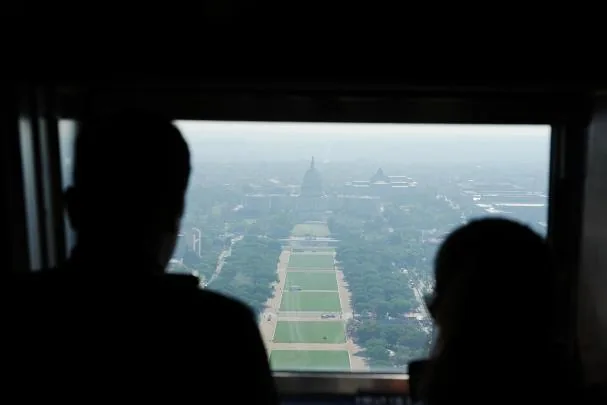
The English king is no stranger to the stage, and he will have to draw on his experience in his speeches today before both chambers of Congress and at the White House dinner to defend the interests of the United Kingdom (among which is a stronger relationship with Europe) without provoking a Trumpian tantrum. When Elizabeth II visited Washington in 1991, she allowed herself the luxury of praising the advantages of multiculturalism and ethnic integration. Bush Sr. thought it was very good; today, it is not so clear that it would be the case. Times have changed quite a bit.
As Starmer lacks credit in the White House, Charles III has been tasked with seeking investments from the United States, promoting a trade agreement, tourism, educational exchange projects, and military investment, which further increase Britain’s unhealthy dependence on its former colony in political, diplomatic, and security matters while Brussels seeks greater autonomy.
The monarch’s mission is to defend the post-war international order without provoking a Trump tantrum
His speech in Congress has been characterized as the most important of his reign, and it is already significant that he delivers it instead of George VI’s flight in 1939, for fear of stammering. In the 250 years of US independence celebrated with the visit, bilateral relations have had crises like those of Eisenhower and Eden, Lyndon Johnson and Harold Wilson, Nixon and Heath. And also sweet moments, like when Reagan and Thatcher rode horses, or Diana and Travolta danced at the White House.
Deep down, it really is all a play, announced not on the neon lights of Times Square but in newspaper headlines.
Read more A new Kissinger wanted