The delegations of Israel and Lebanon gathered in Washington agreed this Wednesday to implement a ceasefire conditioned on the Shiite militia Hizbulah stopping its attacks against Israeli territory and ceasing its operations in the south of the Arab country.
Read more Ukraine pushes back Russia on the front for the second consecutive month
With the mediation of the United States, they designed a plan to create “pilot zones” in Lebanon that are controlled by the Lebanese Army and exclude the Islamist group, they detailed in a joint statement.
Both parties also agreed to hold a new round of negotiations in the U.S. capital on June 22.
Also read
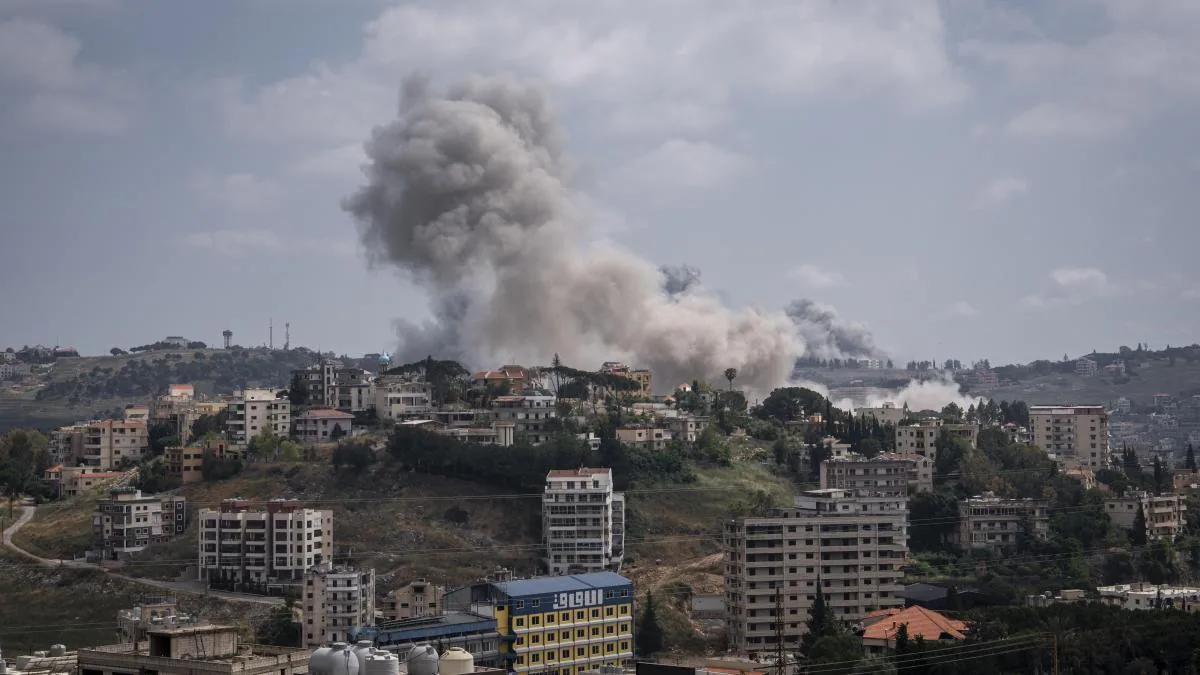
But the truce lasted only a few hours. The Lebanese agency NNA reported this Tuesday that several people were injured in an Israeli drone attack on a vehicle on the road between Zefta and Kfarwa, in southern Lebanon.
Despite the new ceasefire, Israel made it clear that it will not completely stop its military operations in Lebanese territory. Defense Minister Israel Katz stated that Israeli troops will remain deployed in the so-called “security zone” in southern Lebanon, including the area of Beaufort Castle, captured last weekend.
Katz also assured that the Army will continue dismantling Hizbulah’s infrastructure in the region and claimed the “freedom of action,” backed by the United States, to attack targets in Beirut in response to attacks against Israeli territory.
The agreement also causes divisions within the Israeli government itself. National Security Minister Itamar Ben Gvir called the truce a “serious mistake” and criticized Netanyahu for accepting an initiative promoted by the United States. The far-right leader maintained that Hizbulah has not withdrawn north of the Litani River, as Israel demands, and questioned the Lebanese Army’s ability to enforce the terms of the pact.
Read more From pop to punk in a fist at the start of Primavera Sound
The delegations, led by the ambassadors of Israel and Lebanon to the United States, Yechiel Leiter and Nada Hamadeh, met this Tuesday and Wednesday at the State Department headquarters in what was the fourth round of peace negotiations held this year.
The first was held last April 14 and marked the highest-level contact between Israel and Lebanon, neighboring countries that lack diplomatic relations, since 1993.
The contacts have so far served to approve and progressively extend a ceasefire that, however, Israel has broken and intensified its invasion in Lebanon to, it says, respond to the launching of projectiles by Hizbulah, which opposes the negotiations.
The first peace negotiation was held last April 14
According to a joint statement, the round concluded this Wednesday served to agree on the implementation of a ceasefire that “is conditioned on the total cessation of Hizbulah’s fire and the evacuation of all its operatives” between the Litani River and the Israeli border.
“Both parties agreed, with the guidance of the United States, to quickly advance in the creation of pilot zones in which the Lebanese Armed Forces will take exclusive control of the territory, excluding all non-state actors,” they added referring to Hizbulah.
They assured that “these measures will allow progress towards a comprehensive peace and security agreement” and agreed to resume talks at the end of the month “with a view to reaching a comprehensive agreement.”
Read more The House of Representatives punishes Trump by voting against the Iran war