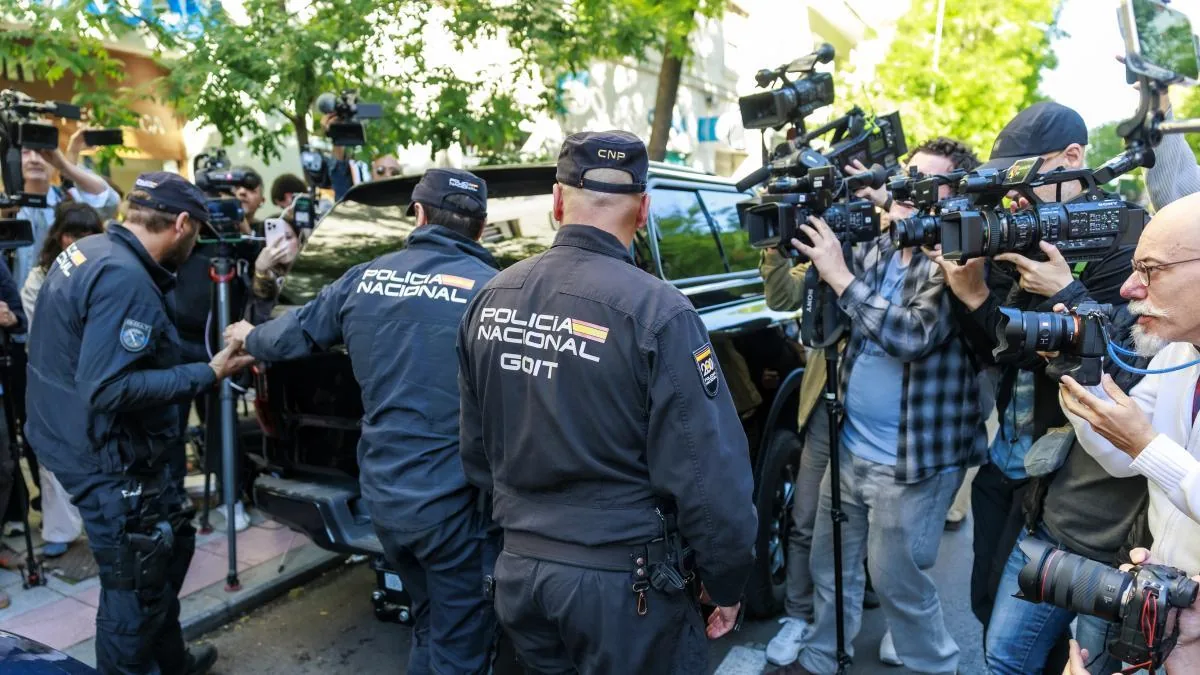
The investigation against José Luis Rodríguez Zapatero, a socialist reference, has sparked a bitter controversy over whether it is an operation by the State apparatus – judges, prosecutors, and police – to end Pedro Sánchez’s government or the result of the normal functioning of justice. In the spotlight, the UDEF (economic and fiscal crime unit), which has uncovered extensive corruption networks but has also been the laboratory for some of the most scandalous illegal investigations in democracy. Two conflicting legitimacies. The Zapatero case is at a stormy crossroads where the obvious desire of the former president to earn a lot of money from various sources, many of them not transparent, which fuels suspicions about his behavior, clashes on one side with doubts about a police unit prone to speculation and with a very questionable track record, on the other.
Read more Former politicians active in the private sector rise sharply in two years
The fact that these police plots have never been seriously investigated proclaims the institutional poverty of Spain, for which the passivity of the current ruling majority, the one that now does recognize lawfare, has also been counted on.
According to the law, the judge is the person who directs and controls the investigations, but the truth is that in Spain in most cases, especially those referring to complex economic movements, they do nothing more than ratify the reports and conclusions of the police and/or the prosecution. And in the case of the UDEF, its record is, to say the least, controversial. Let’s look at some examples, only the best known that should cool confidence in the sagacity of that unit, closer to malice.
One of the most astonishing, that of the former Barça president, Sandro Rosell. Two years in provisional prison awaiting trial, to be acquitted as soon as he sat before the court in charge of judging him. The UDEF reports and the enthusiastic complicity of the magistrate of the Audiencia who was instructing the case, Carmen Lamela, explain the absurdity. This latter was the instructor of the initial cause of the ‘procés’, now occupying a place in the criminal chamber of the Supreme Court. And what is even more disturbing is that she is a magistrate of the Central Electoral Board, which oversees the legality of electoral processes.
The UDEF also handled the instruction of the Pujol case, focused on Jordi Pujol Soley, president of the Generalitat (1980-2003), and his entire family, after the patriarch declared that they all had an account in Andorra. Except him, who excluded himself from the list. It is not about reviewing the strange circumstances surrounding both the opening of the case and its instruction and the effects it had on the intervention and collapse of the Andorran Private Bank. In that case, the matter reached the US authorities, who launched an accusation against the financial entity that meant the end of its days. In the Zapatero case, an agency from that same country also appears as one of the triggers, true but not the only one.
A UDEF member said at the Pujol trial that he was an auditor; in truth, he worked at an auditing firm
Continuing with the Pujol case, it is interesting to recall that the main operational police commander at the time, Eugenio Pino, was convicted for trying to illegally introduce a pen drive into the case; something that the UDEF gladly accepted but that the judge’s diligence, in an unusual example, rejected. The Pujol case is pending sentence. During the hearing, the main member of the UDEF, author of several reports, admitted during his statement that he felt animosity towards the Pujol family. He presented himself as an auditor, a qualification he later downgraded by acknowledging that he had simply worked at an auditing company. He also admitted that many of his findings came from Google searches.
Read more European digital sovereignty but, of which Europe?
This brief review could not fail to include a reminder of the popular group of commissioners notoriously represented in the dark record of police crime by José Manuel Villarejo, whose main occupation was to manufacture dirty laundry so that the UDEF would open dozens of cases that suited them, either for political or economic motivations.
Now, the Zapatero case. The investigation has compiled a long list of deposits into accounts of the former president and a company of his two daughters. Large amounts, in all three cases, and from diverse sources, from activities in Spain to others in more distant places, like China. But gross errors have already been confirmed, such as attributing irregularities in the amortization of a mortgage with dubious income to Zapatero and his wife, which was actually from the sale of what until then had been their main residence.
The judge who imprisoned Rosell with UDEF reports is in the Supreme Court and the Electoral Board
The jewelry episode is pending analysis, but there are already elements to think that it might have nothing to do with what is being investigated, despite its images being leaked everywhere. Some former high-ranking officials who no longer held that position at the time of the events are also mentioned. Surely the public would be more at ease if they knew that when certain accusations or inferences are slipped into a police report, their reliability is assured. The opposite seems like a carte blanche far from the guarantees of a rule of law.
Also because, normally, what is included in those reports is taken literally by the judges. This is the case in the Zapatero case order, which practically copies the vigorous interpretative language of its police author.
As already mentioned, the order by judge José Luis Calama attributes to Zapatero a crime of influence peddling for which, so far, no evidence is provided. At the same time, the references of the accused to the former prime minister are so many that it seems difficult that he was unaware of anything. But these are assumptions. The focus will be on what Julio, Julito, Martínez, the manager of the network of companies that moved the money to Zapatero and his daughters, says. The repentant/collaborator will, again, be the most likely key to the distant resolution of this serious case. But the skeptical gaze must be directed at all involved, including public servants.
Read more Vote for the finalists of the Vanguardia de la Ciencia award