Blow after blow, almost without interruption, the Government and the PSOE watch with bewilderment and astonishment, with alarm and concern, the flood of judicial cases pressuring Pedro Sánchez. This Thursday, with the president’s brother, David Sánchez, sitting in the dock at the Badajoz Court, after agents from the Civil Guard’s central operative unit (UCO) again raided the Ferraz headquarters on Wednesday to gather data on the plot allegedly orchestrated by the former organization secretary, Santos Cerdán, following the indictment of former president José Luis Rodríguez Zapatero, the pending sentence for former minister José Luis Ábalos, or the ongoing process against the Prime Minister’s wife, Begoña Gómez.
Before the judicial agenda further cornered Sánchez in recent weeks, the Ferraz executive meeting held on May 11, before the then already anticipated defeat of María Jesús Montero in the Andalusian elections – widely confirmed the following Sunday at the polls, as the culmination of a disastrous regional electoral cycle – had already anticipated convening the PSOE federal committee, the party’s highest decision-making body between congresses, for June 27.
The initial goal of this meeting, almost a year after the last federal committee session, was to start preparing the next electoral cycle: the municipal and regional elections will be in May next year, and the general elections, if the enormous pressure faced does not end up breaking Sánchez’s resolve, are scheduled for two months later, in July 2027. But the unprecedented acceleration of judicial cases impacting the Government and the PSOE is elbowing its way to be the subject of debate, and also internal tensions, at the announced federal committee meeting.
The problem, for Sánchez’s critics, is that a large majority of the federal committee members continue to close ranks tightly around the PSOE secretary general. Internal opponents resign themselves to criticizing that at least 70% of the salaries of the federal committee members, with delegates from all PSOE federations as well as a broad representation of the PSC, depend precisely on the party leader and head of government. Therefore, neither loyalists nor critics foresee an internal rebellion in the party that could alter Sánchez’s roadmap, determined to withstand all pressures and complete the legislature in July 2027. No matter how many hardships fall. “And when has it ever been easy?” they argue within the PSOE leadership.
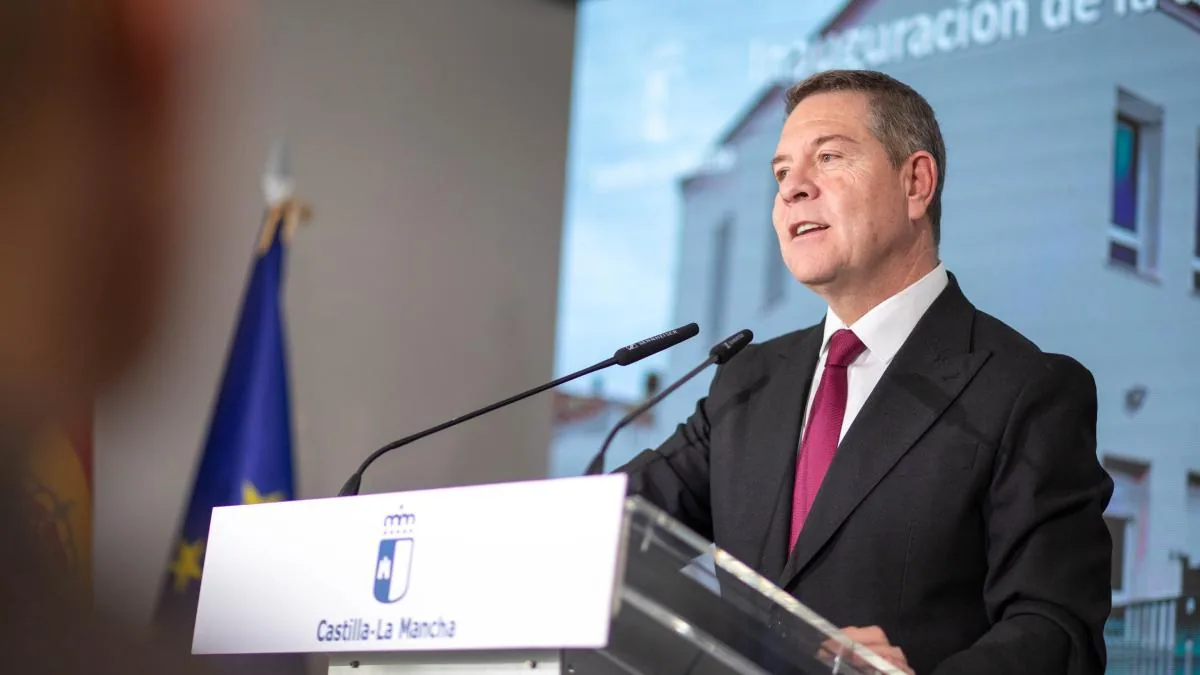
Thus, it is very likely that the president of Castilla-La Mancha, Emiliano García-Page, will again be left alone in his urgent demands to Sánchez: “Either a vote of confidence or elections.” Both sides acknowledge or highlight that Page is in an absolute minority in the PSOE’s highest decision-making body between congresses, although his team always claims that, on the other hand, he is the only socialist regional president who enjoys an absolute majority in his territory. Page was practically left alone in the last federal committee meeting, held in July 2025, again in an atmosphere of great turmoil after the provisional imprisonment of the then organization secretary of Ferraz, Santos Cerdán, accused of several corruption crimes, a year later expanded following new judicial investigations into the case of former member Leire Díez.
“The captain does not abandon ship when rough seas come, he stays to weather the storm,” Sánchez defended before the federal committee
On that occasion, however, Sánchez undertook an urgent reshuffle of the Ferraz leadership, appointing Rebeca Torró as Cerdán’s replacement at the head of the party organization. Although that same Saturday another unexpected last-minute blow was added, after Francisco Salazar’s withdrawal – who was to be Torró’s deputy – due to accusations of alleged sexual harassment. Once this new organizational crisis was resolved, the federal committee closed ranks with Sánchez. “In the middle of a curve, you can’t jump out of the car,” argued a veteran leader at the time. “You chose me as the captain of this ship, and the captain does not abandon ship when rough seas come, he stays to weather the storm, to save the course and reach the port,” Sánchez himself defended.
Page’s was, once again, almost the only dissenting voice at that meeting, which lasted nine hours. “Either the parliamentary confidence we have lost is recovered, and not in exchange for more blackmail from the separatists, or elections,” warned the leader of the Castilla-La Mancha socialists. A dilemma that, a year later, he plans to raise again at the federal committee on June 27.
Page will again raise the dilemma of confidence vote or elections: “If anyone thinks the PSOE is flatlining, they are mistaken”
And, although he will again be alone in his demand at the federal committee, Page assures he is not alone within the socialist ranks. “There is a very large majority that thinks very similarly about the PSOE, but very discreetly. If anyone thinks the PSOE is flatlining, they are mistaken,” he said this Thursday on Cope. “There are many people, not only very honest, very hardworking, many young people with a lot of enthusiasm, many people who know that difficult times will eventually come, but some, many, are taking care of this space of broad consensus that was social democracy, which began in Spain with democracy, with Felipe González, with Alfonso Guerra,” he defended.
Read more Fernández Díaz and Francisco Martínez testify in the Kitchen trial
Page, like many socialist mayors, demands that Sánchez bring forward the general elections to coincide with the municipal and regional elections in May 2027. And he reiterated this again on Thursday: “It is notably unfair that all PSOE public officials in municipalities are used as a bulwark, as a containment wall,” he warned, in the face of the “cluster bomb” of numerous ongoing judicial investigations involving Sánchez, whom he accused of “bunkering” himself in Moncloa.
In the Government and PSOE leadership, in any case, there is full willingness not to give up and to face the enormous political pressure unleashed by the succession of ongoing judicial cases. This was again evidenced this Thursday by the Minister of Transport, a combative Óscar Puente, who was explicit in statements in the corridors of Congress: “We will not bow down,” he warned.
Puente denounces an operation to try to topple the Government: “We will not bow down to attempts to disturb democracy with methods that are not democratic at all”
Puente denounced the attempt by some political forces, referring to the PP, to “bring down a government, not at the polls but with other tricks.” “And certainly the PSOE will not allow it and will not tolerate it. We will not, of course, bow down to anyone’s attempts to disturb our democracy through methods that are not democratic,” he emphasized. “Let the Justice work, let what needs to be clarified be clarified, but let it also be clear that around these investigations there are clear interests in toppling the Government,” he denounced.
“There is a government that they want to topple with methods that are certainly not democratic, that is undeniable,” insisted the socialist leader. And, regarding the ongoing processes against Sánchez’s wife and brother, or the conviction of former Attorney General Álvaro García Ortiz, he assured that “there are judicial cases that do not hold up.”
The minister, who is also secretary general of the PSOE in Valladolid, warned that “there is deep indignation among the socialist membership.” In a veiled reference to the criticisms from Page or former president Felipe González, Puente pointed out that “the people who usually always disagree with what Sánchez does or says are not very indicative of what the party as a whole is.” “Some who are not measuring well will ultimately have the opposite effect of what they intend,” he assured. That is, faced with these internal attacks, the membership will rally to defend Sánchez. “There are many people who already express absolute exhaustion from the spurious political use of these cases, they are already at the limit,” he stressed.
Puente also responded to demands from some parliamentary partners, such as the PNV, to end the legislature this year. “Legislatures end when elections are called or when there is a motion of no confidence. And the decision to call elections only belongs to the Prime Minister,” he assured. “And the Prime Minister’s decision is firm,” he concluded. So, no early elections.
The statement
The PSOE denies the accusations and offers cooperation to justice
The PSOE states “categorically” in a statement that the party “has not ordered, supported, or cooperated in any of the criminal behaviors” described in Judge Pedraz’s order and that attributes to the socialists alleged payments to sabotage judicial investigations. The PSOE insists that it is the “primary interested party” in clarifying the case and awaits the lifting of the secrecy of the file to analyze “in depth all the details” and “provide all pertinent explanations. With the transparency that characterizes this organization.” The presence of the UCO at the socialist headquarters lasted until 12:30 a.m. today.
The statement recalls that there was already an open case with the same protagonists and coinciding facts. The party expresses its displeasure at the existence of two cases on the same facts and offers all the cooperation that justice requires. “Absolute respect for Justice and maximum cooperation. The Socialist Party has a firm commitment to act decisively against any irregular behavior, as we have always demonstrated,” the note concludes.
Read more The group of nine that intended to destroy judges, prosecutors, and police officers