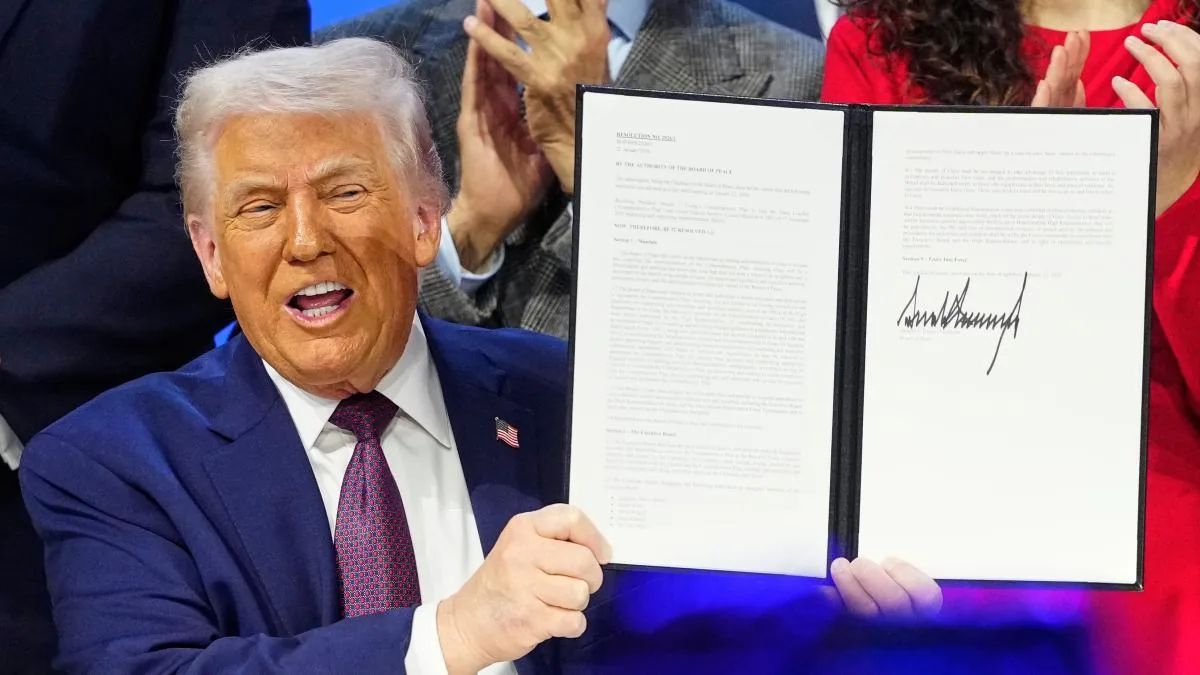
Shortly before getting bogged down in the Iran war, Donald Trump launched the Peace Board, the initiative with which the U.S. president sought to consolidate the pacification and reconstruction of Gaza. The project was surrounded by doubts from the start, and the passage of time seems to be proving the skeptics right: four months after its establishment, the body lacks official funding and has not achieved any progress on the ground.
Read more Iran and the U.S. exchange attacks against military bases
According to the Financial Times reported yesterday, the fund established by the World Bank to channel donations to the Board has not received a single dollar. The only transfers have been made to an account at JP Morgan Chase bank, which, unlike the official fund, is not subject to any transparency mechanism or external control.
The payments known – 3 million dollars contributed by Morocco and 20 million by the United Arab Emirates – have been used to cover expenses of the office of the Board’s director general, the Bulgarian diplomat Nikolai Mladenov, and little else: the Emirati government also disbursed 100 million to form a new police force in Gaza, but the program has not yet started and the funds are frozen. Likewise, the U.S. has budgeted 1.2 billion dollars for various projects in the strip, but the money has not reached its recipients either.
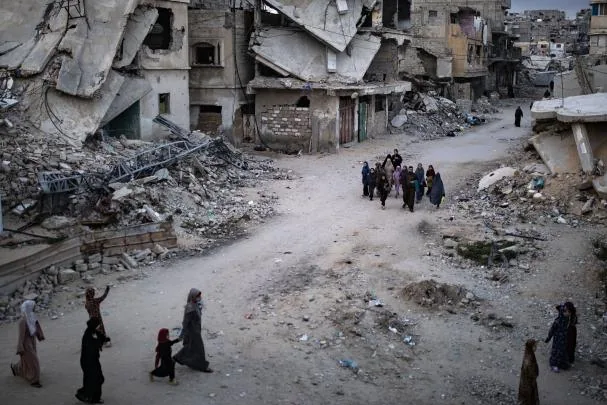
In a report sent on May 15 to the UN Security Council, the Board already warned of “a gap” between the commitments made by its members – about 17 billion dollars – and the disbursements made, and urged accelerating payments to be able to advance the reconstruction plan of the Palestinian enclave.
In that same report, it was also acknowledged that the peace process is stalled, and Hamas was blamed for it, due to its refusal to disarm and hand over control of Gaza to a transitional government, as stipulated by the plan outlined by Trump. However, Israel was barely mentioned in the document, despite its army repeatedly violating the ceasefire in recent months: according to Gaza authorities, more than 880 inhabitants of the strip have died from Israeli fire since last October, when the truce came into effect.
The Board has not only proven completely ineffective in pacifying the strip, but it is also unable to facilitate the entry of aid to the enclave. Humanitarian organizations denounce that Israel continues to hinder their work, forcing them to overcome multiple – and endless – bureaucratic procedures to assist the civilian population.
Read more Fernández Díaz and Francisco Martínez testify this Thursday in the Kitchen trial
“The Palestinians in Gaza continue to go hungry, they still cannot access medical care,” said last week Adam Coogle, deputy director for the Middle East at Human Rights Watch, who emphasized that the body created by Trump is doing nothing to alleviate the situation.
The paralysis of the Board also affects its only body with Palestinian representation: the Gaza National Administration Committee, made up of about fifteen technocrats. Its function is to oversee governance of the strip until the Palestinian Authority can take control of the enclave. But, although this entity held its first meeting in January, its members have not yet set foot in Gaza. According to Arab media, they are confined in a hotel in Cairo, under the surveillance of U.S. and Egyptian agents.
Nothing moves then in an institution that always seemed more designed to satisfy Trump’s personal ambitions than Gaza’s needs.
The magnate conceived the Board as an alternative to the UN, and designed it to his liking, as if it were one of his golf clubs: he reserved for himself the role of perpetual president, as well as the power to annul the decisions of its members, who were required to pay a quota of 1 billion dollars. This caused many Western countries to reject the invitation to join the body. The only ones willing to take the step were Trump’s ideological allies, including several autocrats, such as Cambodian Prime Minister Hun Manet, or Kazakh President Kassym-Jomart Tokayev. Doubtful partners if the goal is to seek peace.
Read more The Badajoz Court opens the trial for the hiring of David Sánchez