Good morning,
After this Sunday’s elections, only four absolute majorities remain in Spain: Galicia, Andalusia, La Rioja, and Castilla-La Mancha. The sign of the times today points to coalition governments as the most plausible option due to the will of the voters. Juan Manuel Moreno Bonilla obtained more votes in Andalusia than four years ago, but the d’Hondt method condemned him to fall short of the majority by two seats. The Andalusian president has achieved an excellent result, also considering the logical wear of governing for two consecutive terms. No merit should be taken away from Moreno. But the reality is that he will now have to sit down to negotiate with Vox, a party he harshly criticized throughout the electoral campaign and which will surely make him pay a high price to invest him as president, either through a favorable vote or abstention. Under other political circumstances, the PP could try to negotiate the PSOE’s abstention, but with the existing polarization in Spain, this possibility seems like science fiction.
Read more Teresa Rodríguez reveals that she has cancer and is undergoing chemotherapy
The PP’s drama is that it has no choice but to negotiate with Vox, a party whose main aspiration is not to govern in coalition with the Populars, but to occupy their political space. Given this premise, it is normal that this negotiation is a headache for the Populars. Moreno himself expressed this very clearly at the opening of the electoral campaign in an event at the Murillo Gardens in Seville. That day he already pointed out that they could not make a pact with Vox: “We cannot get into trouble when things are going reasonably well, we cannot depend on those who want to put sticks in our wheels, who want to blackmail us, or who want to go back, back to the darkest past we have had in Andalusia.” So: there will be trouble. This is what now awaits the Andalusian PP.
With the Andalusian elections, the regional cycle organized by the PP to highlight the socialist crisis ends. The electoral calendar required elections to be called in Castilla y León and Andalusia, but the PP decided to bring forward those in Extremadura and Aragón under the excuse that they did not have a majority to approve the budgets. The strategy to wear down the socialists has been achieved handsomely. Objective accomplished. The PSOE is losing momentum, election after election, and in Andalusia it has obtained the worst result in its history. That it was foreseeable does not diminish the significance that María Jesús Montero could not avoid the debacle. Surely the coincidence of the electoral campaign with the trial of José Luis Ábalos may have influenced the mood of socialist voters, but the leaders in Ferraz would be wrong to settle for this excuse.
Andalusia has turned its back on the PSOE after years in which they controlled all the levers of power in the community. The socialists won the first nine regional elections consecutively in an overwhelming manner. The decline began in the 2012 elections when the PP won, but the socialist José Antonio Griñán was able to govern after a pact with United Left. In 2015, Susana Díaz was invested thanks to the abstention of Citizens. And already in 2018 the PSOE moved to the opposition. Its fall to the depths has been decisive since 2004 when they obtained 61 seats. It is worth noting: in 2008, they dropped to 56; in 2012 and 2015 they dropped to 47; in 2018 they were 33; in 2022, 30, and now they have reached 28. It is a trend that invites deep reflection by the socialists.
Pedro Sánchez is very clear that regional elections are one thing and general elections another. He experienced this with satisfaction in 2023 when, after suffering a clear defeat in the former, he improved significantly in the latter and was able to be invested president. But the experience of this last electoral cycle leaves a bitter taste in the PSOE, which sees its results worsen vote after vote, except in Castilla y León.
According to the map designed by the PSOE, the legislature will run its course and elections will be held in July or September 2027. Until then, Pedro Sánchez’s great weapon to renew his investiture will be to contrast his alternative against a coalition government between PP and Vox. All the noise and conflict generated by these two parties in the coming months will be the nourishment from which the PSOE will feed to aspire to renew power. That is why it is so important for them that the PP fell just short of an absolute majority in Andalusia.
Santiago Abascal’s party has only gained one seat in Andalusia, far from the good results it obtained in Extremadura and Aragón. It is significant that precisely in these two communities where the PP brought forward the elections, Vox has obtained better results. Another reading is that Castilla y León and Andalusia have been the most recent elections and the party of Santiago Abascal has been penalized for its obstructionist position to the pact with the PP in Extremadura and Aragón, especially in the former, where it almost forced new elections. The party’s internal crises with expulsions of historic leaders have also contributed to wearing down the formation.
From now on, there will be no elections until the municipal and regional ones in 2027, if there is no other electoral advance, and it will be the moment when Vox will play its cards in its relationship with the PP. All the trouble generated by both parties will benefit the PSOE. If both are able to govern jointly without tensions and in peace, Alberto Núñez Feijóo will have a straight highway to Moncloa. On the other hand, if controversy and disagreements mark the tone of their relations, Sánchez will have arguments to awaken the vote of abstainers. If the national priority becomes the daily topic, it will be bad for Núñez Feijóo.
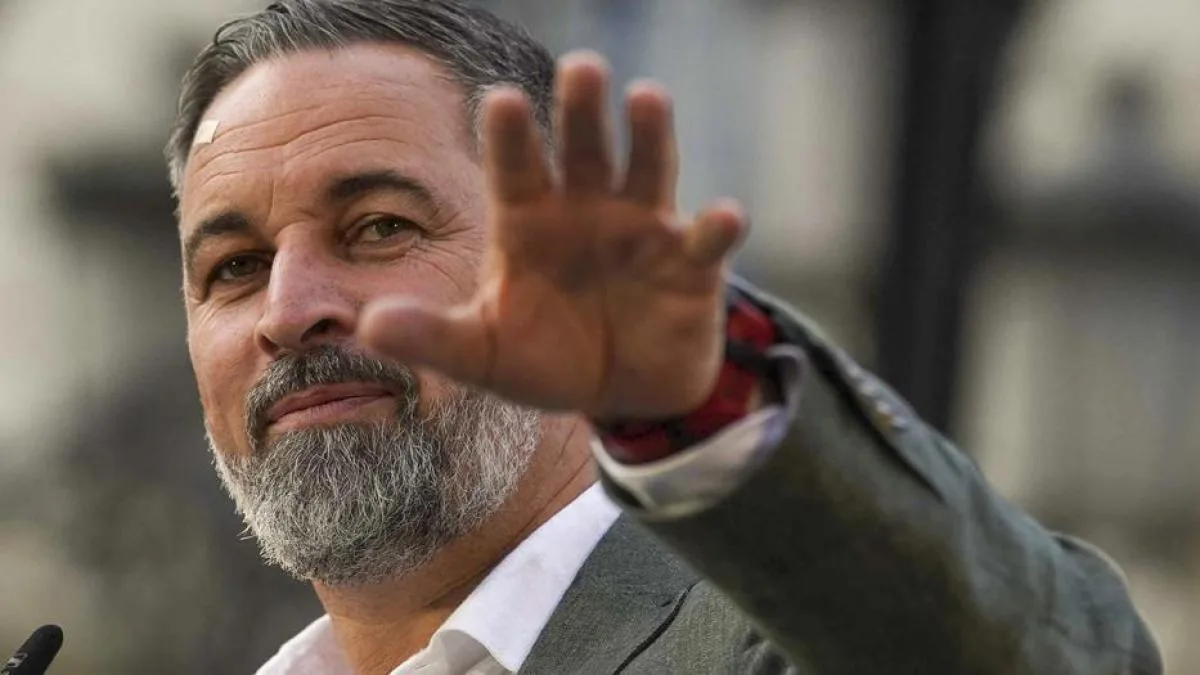
Abascal is going to play his cards. He always repeats that he does not want to be the vice president of the PP leader, but president of Spain. Therefore, nothing can be ruled out. Even that they leave the coalition governments with the PP before the general elections, as they did at the time.
That said, it will be very difficult for Sánchez to repeat the 2023 investiture. Junts and Podemos are not willing, and the formations grouped in Sumar suffer a serious setback in all the elections held in recent months. To repeat a PSOE majority with progressive and nationalist formations, a change of trend should occur that is not seen anywhere today. Only a fierce war between PP and Vox can facilitate it. It is in Santiago Abascal’s hands to decide how big the trouble will be.
Read more Moreno shipwrecks on the shore
AS EVERY MONDAY, HERE ARE A SERIES OF REFERENCES PUBLISHED THIS WEEK IN ‘LA VANGUARDIA’ THAT YOU CANNOT MISS
A new meeting with La Vanguardia subscribers, this time featuring the chief photography editor, Xavier Cervera.
A report on what the 15-M meant and its relevance today, fifteen years later.
An interesting interview with historian Antony Beevor who publishes Rasputin and the Fall of the Romanovs.
A brilliant investigation revealed by Joan Esculies about who thwarted Francesc Macià’s insurrection in Prats de Molló.
The fears generated by Anthropic’s powerful artificial intelligence and how the CNI tries to prevent cyberattacks, by Joaquín Vera.
An update on the alternatives in the French presidential elections scheduled for May 2027, by Eusebi Val.
An investigation by the A Fondo team on the salaries of the Anti-Fraud Office.
A visual narrative exercise by Laura Aragó on the development of drones in the Ukraine war that allow sending these devices up to 1,500 kilometers away.
Two emotional tributes to our colleagues Óscar Muñoz and Lluís Permanyer held last Thursday.
Read more The PP, chained to Vox
AND THESE ARE MY ARTICLES FROM LAST WEEK:
-Tuesday, May 12: They are “one of ours”
-Wednesday, May 13: A bad day for Madrid
-Thursday, May 14: The ‘mortadelos’ return
– Friday, May 15: The cause of 15-M is still alive
-Saturday, May 16: Europe against Xi and Trump
-Sunday, May 17: The dark side of AI