






It’s a scenario no one wants to talk about too eagerly, but one that seems increasingly real: the possibility that the EU might have to defend itself without the US security umbrella. EU heads of state and government will discuss this week at the Cyprus summit the implications of Article 42.7 of the EU treaty, the clause that obliges member states to provide assistance if another country in the bloc is attacked on its territory. To all intents and purposes, the European equivalent of NATO’s Article 5.
They will do so in Cyprus, a country that holds the rotating presidency of the Council of the EU this semester, and which is hosting an informal summit that could not be more pertinent. Cypriot delegates have long wanted to address the issue at the highest level, as it
is not a NATO member country
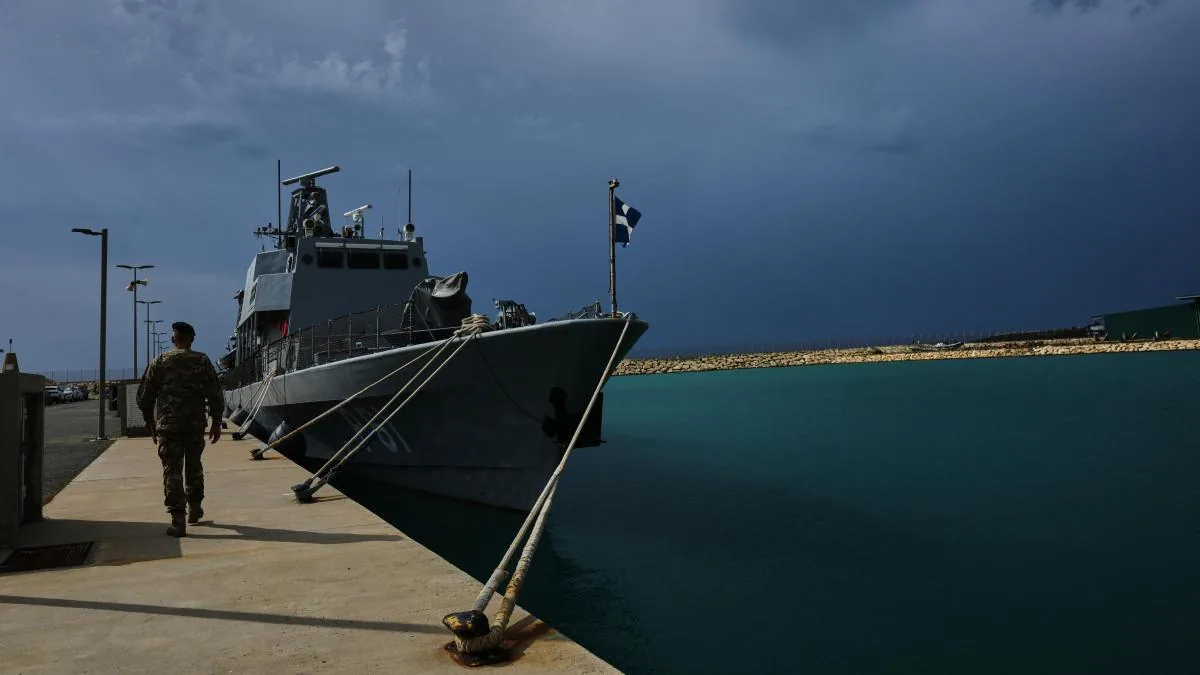
–Turkey has not allowed it– but it is an EU member. Iranian drones that impacted its territory targeting British naval bases led some European countries, including Spain, to send warships to this corner of the Eastern Mediterranean.
The Cyprus summit of heads of state and government will address mutual assistance in case of aggression
“The Union’s ability to cope with the challenging geopolitical and security context will also be part of this discussion,” wrote European Council President António Costa in his letter to leaders ahead of the summit. Costa referred to Article 42.7, “in light of ongoing work.”
All this, while the EU is already planning more military than bureaucratic simulations of this mutual assistance mechanism. Brussels wants to know how decision-making will be practically applied if a member state requests military support from the rest of the EU. A drill that will first be carried out at ambassador level, and then at the meeting of defense ministers that will take place in Cyprus in May.
“We are in a changing geopolitical world, so it doesn’t hurt to have an almost bureaucratic discussion among ourselves to discuss: when a member state invokes assistance under Article 42.7, how do we do it? Who calls, who meets, who coordinates?” explains a European diplomat. So far, this article has only been activated once, after the terrorist attacks in France in 2015, “and the world has changed considerably since then,” this same source believes.
There is not only fear in Cyprus. Article 42.7 was also recalled after Donald Trump’s multiple acquisition offers for Greenland, an autonomous Danish territory. Some insist that it is best not to make too much propaganda about this tool. It could be another excuse for the Republican to disengage from NATO.