








The European Union is moving to prevent European citizens from becoming victims of sexualized deepfakes. The Member States (the Council) and the European Parliament reached an agreement tonight that explicitly prohibits marketing within the community bloc of Artificial Intelligence (AI) systems that generate non-consensual sexually explicit and intimate content or child sexual abuse material, such as the so-called “nudification” applications that are increasingly growing among the Twenty-Seven.
Read more Vallecas is going to Leipzig to play its first final in style
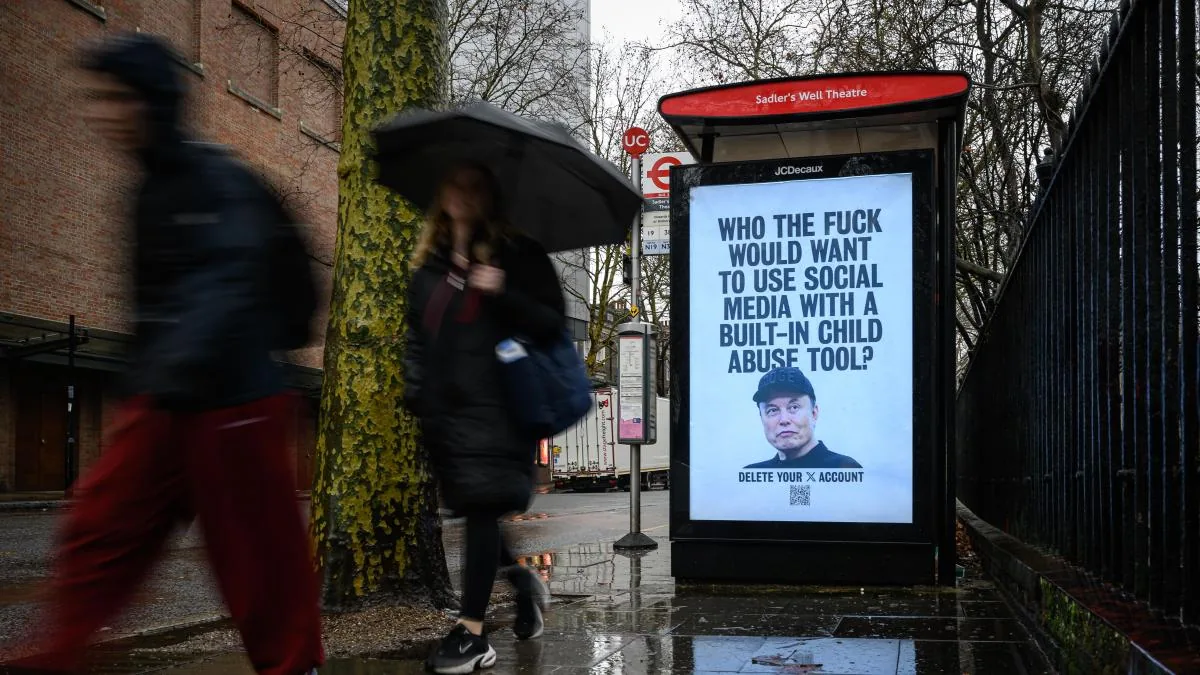
This is an amendment introduced in the negotiations on changing European regulations to simplify the rules for AI companies. It was added, at Spain’s proposal, after the social network X was flooded earlier this year with sexualized images of real women undressed through the chatbot Grok, something that has already led Brussels to formally investigate the image generation and editing AI integrated into the former Donald Trump advisor’s social network.
Growing problem
Nude applications have even affected Giorgia Meloni
The issue has even affected the Italian Prime Minister, Giorgia Meloni, who has denounced the spread of a series of AI-generated photographs of herself in which she appears, among other things, posing in underwear.
The new regulations will begin to be applied in the EU from December 2, but a final step is still required for the regulation to be ratified by both the European Parliament and the Council. From then on, AI models should have a series of security measures in Europe to prevent them from generating this type of harmful content.
Also read
Specifically, the ban applies to the marketing in the EU market of artificial intelligence systems intended to create such content; also to systems that enter the EU market without reasonable security measures to prevent them from functioning and also to operators who use these systems to create such content. The content in question may consist of images, video, or audio.
Read more ‘1984’ applies well in 2026
“We have not counted how many applications there may be with these nudification systems, but we know it is a growing problem and everyone is aware of what happened with Grok and X,” explains Swedish MEP Arba Kokalari, rapporteur of the Internal Market Committee. “There are many app developers who are putting safeguards in place and we hope it will be a good guide for them,” she considers.
Review
The review also gives companies more time to apply European rules
The ban is part of the review of European AI regulation agreed between the European Parliament and the States which, on the other hand, involves what the most critical interpret as an EU concession to the Big Tech. The agreement gives more time to companies in these technologies, as requested by the Commission, to adapt to the new regulations aimed at regulating the activity of systems considered “high risk,” that is, those operating in sensitive areas such as security, health, or fundamental rights.
Initially, the requirements were to come into force in August, but the EU postpones it until December 2027 and also gives them more time, until August 2028, in the case of AI systems used as security components and regulated by EU sectoral legislation on market security and surveillance. In addition, the obligation for companies to label AI-generated content with watermarks (watermarking) is also postponed until December 2026.
According to Kokalari, this will allow companies that develop and use AI to know that “they can start developing AI in Europe,” “so that we can face competition from China and the United States in the technological race.” “Our companies and citizens want two things from AI rules. They want to be able to innovate and feel safe. Today’s agreement does both,” said the European Commission’s Executive Vice-President for Technological Sovereignty, Security, and Democracy, Henna Virkkunen.
Read more Russia asks Ukrainians to evacuate Kyiv on May 9 due to the threat of a major attack