The secular file of the substantial pending investments of the State in Catalonia remains at the center of the political/business debate. The latest episode, Junts’ vote in Congress against the creation of an equal investment consortium between the State and the Generalitat, agreed upon by the Govern and ERC.
Read more Knowing how to wait
Proposal archived. Although economic forces do not resign themselves to things staying as they are, that is, to projects being shelved due to lack of resources or execution when these are theoretically available.
The president of the Cambra de Barcelona, Josep Santacreu, one of the historically most active bodies in analyzing the perpetually postponed State investments, has organized a meeting with Junts leaders to hear their explanations about their vote in Congress. Those from Carles Puigdemont’s party, for their part, point out that during the processing of the proposal no one contacted them and that, besides considering the consortium inoperative, its only utility is to facilitate the budget pact between PSC and ERC, accounts they do not support. “In Madrid, they don’t have a consortium and State investments are going like a rocket,” they say from the party.
The Cambra, Pimec, presided by Antoni Cañete, and the Cercle d’Economia, led by Teresa García-Milà, participated a few days ago in an event organized by PSC and ERC in support of the creation of that consortium. An event scheduled with the not-so-hidden objective of focusing business pressure on Junts and their key vote in Congress. Alicia Romero, Economy councilor, very concerned about the consequences of investment paralysis, also participated.

The controversy of the meeting was the non-invitation to intervene to Foment, the employers’ association presided by Josep Sánchez Llibre. Several business leaders expressed at that moment their surprise at seeing the most representative organization and reference of the largest companies left out and considered that this decision weakened the unity and strength of those in favor of changing the situation. It is no secret that the Govern has not yet forgotten the criticisms of the president of Foment regarding the autonomous financing agreement, despite having signed a final support document with the rest of the economic organizations that included the consortium proposal.
Precisely today Sánchez Llibre presents Foment’s annual report on State investments in Catalonia, repeating a ritual of almost a decade.
Undoubtedly, business organizations will make proposals in the coming days to overcome political division and find mechanisms to unblock the practical paralysis of public investment in Catalonia.
+++
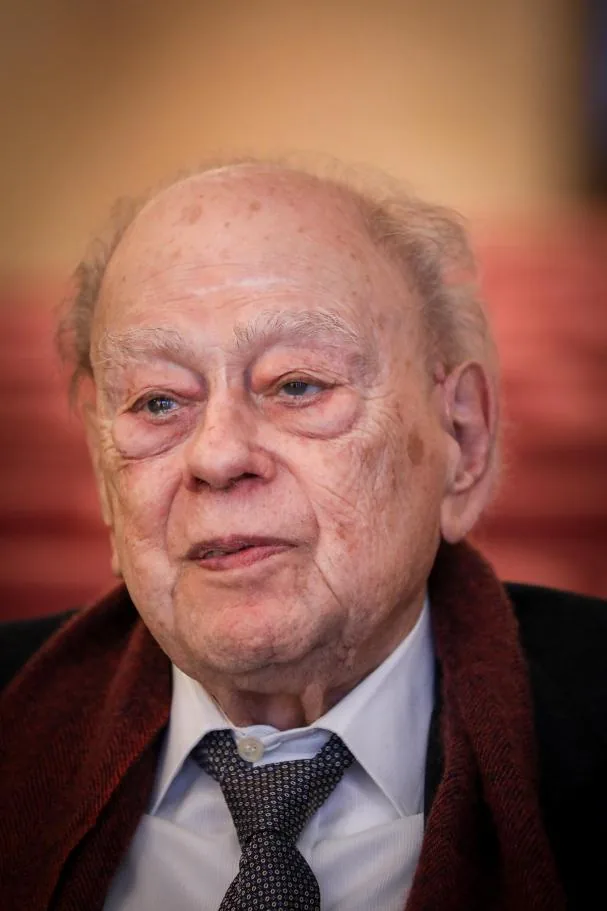
J ordi Pujol i Soley, president of the Generalitat between 1980 and 2003, has finally been left out of the judicial case concerning his family’s enrichment. Accepting the forceful and repeated diagnosis of the forensic doctors about Pujol’s health condition, it is possible that the National Court spared itself the unpleasantness of his acquittal, given that the character has barely been mentioned in the trial and his participation in the investigated facts has not been proven.
Read more The mysteries of the hantavirus that has caused a deadly outbreak on a cruise ship
The case has barely provided any evidence, despite some of the accused being suspects and their adventures having been widely published in the press. The facts date back many decades, and when the investigation began, there were hardly any traces left. Another consequence of the cloak of political, police, and judicial impunity that for many years surrounded public management in Catalonia and Spain.
Pujol was not to be disturbed in Catalonia while he supported governability in Spain. Later, with the procés, the PP government and the State apparatus tried to compensate for that neglect by fabricating false evidence, using illegal methods, and paying witnesses of dubious credibility. When that became evident, from a few years ago until now, judicial independence has taken care of covering everything up, as shown by the statements of Mariano Rajoy, María Dolores de Cospedal, and Jorge Fernández Díaz in the Gürtel case.
The bulk of the dirty war against independence, the so-called Operation Catalunya of the patriotic police, ended up in baseless setups: alleged accounts, false, abroad; crude document manipulation; testimonies of convicted fraudsters without resources paid with reserved funds; creation of invented profiles about public figures.
But the mudslinging machine of Commissioner Villarejo and his sewer colleagues in the Interior Ministry found, with illegal methods, something that would end up being true. Yes, you know, the Pujol family’s accounts in Andorra.
This is not the time to repeat the whole story, well known. Almost twelve years have passed since their existence became known, with Pujol’s statement, the so-called “confession.” In reality, it was never such, as it was about setting a narrative that preserved his political image and at the same time hid a key fact. It was not only his family, wife, and children who had accounts in Andorra, he also had his own. It is not an unknown fact, but it is worth recalling it, to fix it, now that the case has ended for the former president.
The 63810-2, opened on December 21, 2000, at Banca Reig, now Andbank. A different date from the rest of the family, those from 1992. It was opened by his eldest son, Jordi, with 307 million pesetas in cash, coming from Barcelona and contributed by important businessmen from the city. The reason? “Gratitude for his years of dedication to politics and as a kind of guarantee for his imminent retirement, three years later,” according to the benevolent interpretation of someone familiar with the facts. The still president, it was the year 2000, sent the bank a handwritten letter assuming ownership. Later it was explained that it was all a comedy to hide money from the eldest son in the eyes of his wife, from whom he was separating. But the facts do not match that narrative. It was his money and in case of death, his wife, Marta Ferrusola, would inherit it. It was Pujol’s own bequest.
Obviously, the legacy of a figure of Jordi Pujol’s stature is not summarized only with that bank deposit. It is much broader and more complex. His enormous and relevant role in Catalan and Spanish politics will still give much work to analysts and historians. But the very existence of that account and Pujol’s behavior to hide it are also an indispensable key to deciphering his personality and provide elements to interpret his public behavior.
Read more Latin gangs in Barcelona recruit under-14s at school gates