The wooden doors of most of the nearly 200 vaulted shops surrounding the outer part of the grand Naqsh-e Jahan square are closed. The printed fabrics, carpets, carved copper objects, among other products sold in this bazaar that has fascinated tourists for centuries, now gone, are kept inside by order of the authorities. Many of the families who usually take advantage of this time on a spring day to have a picnic have not arrived either, much less the teenagers – many of them without veils – who enjoy riding electric motorcycles around the square.
Read more Meanwhile
Attention this afternoon is focused around the main fountain, where a platform has been set up. From there, children’s choirs and religious singers entertain thousands of people gathered by the authorities in this square, the most emblematic place in Isfahan, which, after Tehran, has been the city most affected during the war. “When they attacked the mountains, the whole city trembled,” says Nazanin, who works at her sandwich stand near the bazaar.
Most of the bombings occurred on the outskirts, near the rocky mountains surrounding the city, where, among other facilities, some plants of the nuclear program are located. Days ago, Rafael Grossi, secretary of the International Atomic Energy Agency, stated that Iran stores in this underground complex a “significant percentage” of the 440 kilos of uranium enriched to 60%.
“Some of us wonder why they have to have so many military facilities around the city. Are they using us as shields?” says a 67-year-old clothing merchant in the bazaar.
The economic crisis worsens the unrest in a city hit by war and drought
The attack on the government headquarters, located a few meters from the square, broke the windows of many shops and caused damage to monuments such as the Aali Qapu palace, whose covered balcony overlooks this large rectangular space of 89,600 square meters, declared a World Heritage Site by UNESCO.
From there, several snipers protect this afternoon the gardens where thousands of women, mostly covered with black chadors, and men dressed in official suits or military uniforms are seated on plastic seats around the fountain. They are joined by hundreds of armed militiamen, whose motorcycles are parked on the streets of the square. All, with few exceptions, carry Iranian flags.
They have been summoned to celebrate the anniversary of Imam Reza, the only one of the twelve Shia imams buried in Iran. “Isfahan is a traditional city, but that does not mean we all support what the rulers do. If they had treated us better, there would be fewer people against them,” says a man who asks to be called Mohamed, 38 years old, who works in an ice cream shop near the square.
Read more Harassment in the supermarket
On the opposite side of the Zayandeh River, currently without water due to the drought that has plagued this desert region for years, Morteza invites us for a walk on Friday morning. The scene in the gardens is surprising even for the inhabitants of Isfahan, known for being extremely traditional.
“If they had treated us better, there would be fewer people against the Government,” says an ice cream vendor
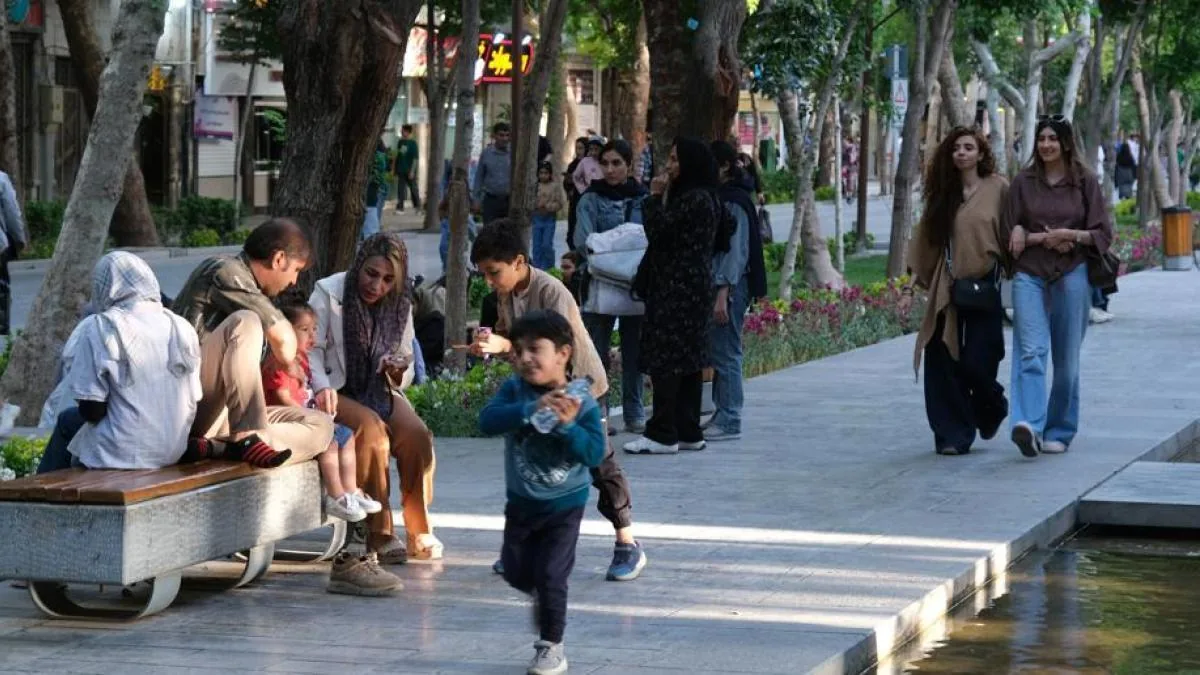
“Isfahan is a city divided in two,” explains Morteza, a 28-year-old doctor. On one side, those who go out every night to strategic points to wave flags and chant slogans in favor of the Islamic Republic. “The others are the people around us,” he points out. Dozens of men and women of all ages, especially young people, exercise. Many girls wear tight leggings, T-shirts that show their figure, or looser short-sleeved ones. The veil, for many, has disappeared.
Mariam, a 30-year-old engineer, attributes this change to several factors: Mahsa Amini gave the first impulse, the protests last January – which left hundreds dead in Isfahan – and then the wars. “I think our families have understood that they cannot demand us to behave as a government they do not believe in asks,” she says, although she fears attacks may return at any moment, a common feeling in the city. Still, she trusts the future and believes that, in a way, life is better today than before.
Morteza is more skeptical. He fears social division, but above all the economic crisis. He says one of his uncles is a businessman and has had to lay off 30% of his employees. It is not an isolated case: merchants agree that the city has never had so many economic problems. The absence of tourism, the drought – although it has rained more this year – and inflation place them in a critical situation.
Regime supporters gather in the monumental square for the anniversary of Imam Reza
Still, all the people consulted agree that the city is gradually regaining its vitality. Parks are filling again with families having picnics, the singers who gather every night under the arches of the Khajoo bridge have returned, and young women are riding bicycles and motorcycles again, something previously unthinkable.
<p“There is no doubt that, as difficult as life is today in Isfahan, we are much better off than in Tehran,” says Nazanin. Better or not, at least there are more smiles and a greater desire to enjoy.
Read more Trapped in the burofax after the fall of the decree to extend the rentals